How to Style a Wedding Tablescape (Build It Backwards)
The secret to high-end wedding table decorations isn’t found in the flower market. It’s found in the way the candlelight hits a fluted wine glass and the weight of a linen napkin against a stoneware plate.
If you’ve ever looked at a reception photo and thought, “Why does this table still feel unfinished?”, even with a massive centerpiece, the issue is rarely the florals. It is the base layers. Glassware, plates, flatware, and linens create the architectural “bones” of the design. Without them, your wedding tablescape are just objects sitting on a surface; with them, they are part of a curated narrative.
To create a table that feels intentional and expensive, you have to build it backwards. We start with glassware (the element guests touch most), and work outward until the florals are the final, effortless addition.
Quick reality check: If your venue or caterer includes basic glassware and you can’t swap it, don’t worry, this method still works.
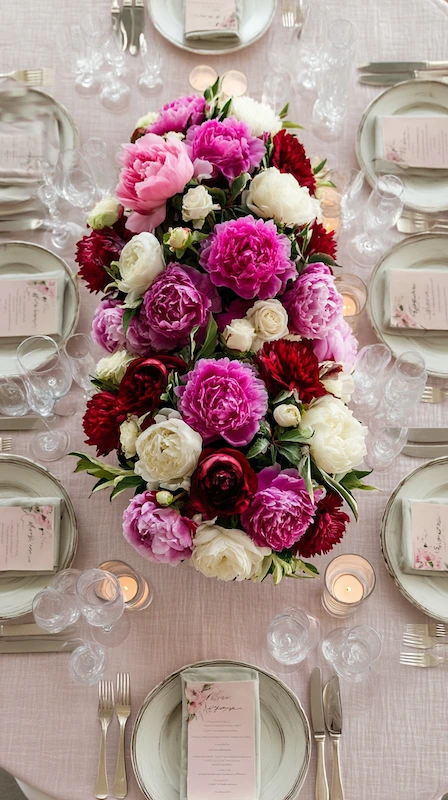
Why start with glassware?
1) Glassware controls the “sparkle level” of the table
Glass catches light, reflects candles, and shows up in nearly every reception photo. If your glassware looks elevated, the whole table reads elevated, even with simpler flowers. It is the most overlooked element of impactful reception tablescape.
2) It creates instant style consistency
When you choose glassware first, you naturally select plates, flatware, and linens that match it. You avoid the common mismatch: gorgeous flowersClassy/timeless styling sitting on a table that looks randomly assembled.
3) It’s a budget-friendly way to upgrade the look
If you’re trying to get a luxury look without overspending, these budget-friendly wedding decorations are great “high-impact, low-cost” upgrades to pair with this tablescape method.
A modest centerpiece can still feel “designer” when the place setting is intentional. Starting with glassware helps you spend where it’s most visible, ensuring your table styling feels premium without needing an infinite floral budget.
The Backwards Tablescape Method (the order matters)

Here’s the exact build order for professional-grade wedding tablescape:
- Glassware (The Anchor)
- Plates + Chargers (The Frame)
- Flatware (The Line Work)
- Linens + Napkins (The Texture)
- Paper Goods + Table Numbers (The Detail)
- Centerpiece + Candles (The Finish)
- Final Spacing + Photo Check
If you follow that sequence, your florals will naturally “fit” the table rather than trying to rescue it.
Editorial Tablescape Specs (Sizes, Quantities + Spacing Rules)

If you want your wedding tablescape to look like a styled shoot, use these pro specs. They keep the table from feeling crowded and help everything photograph cleanly.
Common rental sizes (so you order the right scale)
- Round tables: 60″ (8 guests), 72″ (10 guests)
- Rectangles: 6ft (72″ long) and 8ft (96″ long) banquet tables
- Chargers: typically 13″–14″ diameter
- Dinner plates: typically 10.25″–11.5″ diameter
- Salad plates: typically 8″–9″ diameter
- Taper candle heights: 10″–14″ is the sweet spot for “editorial” height without towering over the table
- Hurricane cylinders (if using): typically 8″–12″ tall (great for wind + safety)
Candle Quantity Cheat Sheet (60” Round Tables)
You’ll get the best results when votives are clustered (not sprinkled randomly). For a 60” round, aim for one clear focal zone in the center and keep the outer edge clean for dining.
Option A: One Low Centerpiece + Candles (classic + easy)
- Votives: 8–12 total
- Tapers: 0–3 (10–14″ tall) only if you want height
- Centerpiece: 1 low compote (or low arrangement)
Placement tip: Arrange votives in 2–3 clusters of 3–5 candles each around the centerpiece, not in a perfect ring.
Option B: Bud Vase “Cluster Look” + Candles (airy + editorial)
- Bud vases: 6–10 (mix 2–3 vase shapes, same color family)
- Votives: 10–16 (this is what makes it look expensive)
- Tapers: 0–2 (optional, keep them near center)
Placement tip: Build one loose cluster that covers roughly a 16–20″ circle in the middle of the table.
Option C: Minimal Modern + Glow (clean, not bare)
- Votives: 6–10
- Tapers: 0–2
- Florals: 1–3 sculptural arrangements or a single low piece
Quick rule: If the table looks flat in photos, add 4 more votives before you add more flowers.
60” Round Spacing Rules (So It Looks Styled and Guests Can Eat)
- Keep decor contained to a center footprint of about 16–20″ wide.
- Keep the outer edge clear: leave 12–15″ of open space in front of each guest.
- Don’t crowd glassware: keep 3–5″ between glasses and any decor/candles.
- If you’re using menus at each place: keep paper goods flat and tight to the charger so they don’t creep into the glassware zone.
Height rules (the #1 “why does this look messy?” fix)
- Anything that blocks conversation or hides your glassware should be:
- under 12″ (low look) or
- above 24″ (tall look)
- The awkward zone is 12″–24″ (it visually chops faces and reads “in the way”).
Step 1: Choose your glassware first (your anchor)
Glassware sets the tone faster than almost anything else. Pick one clear direction and stick with it across all guest tables.
Pick a glassware “family”
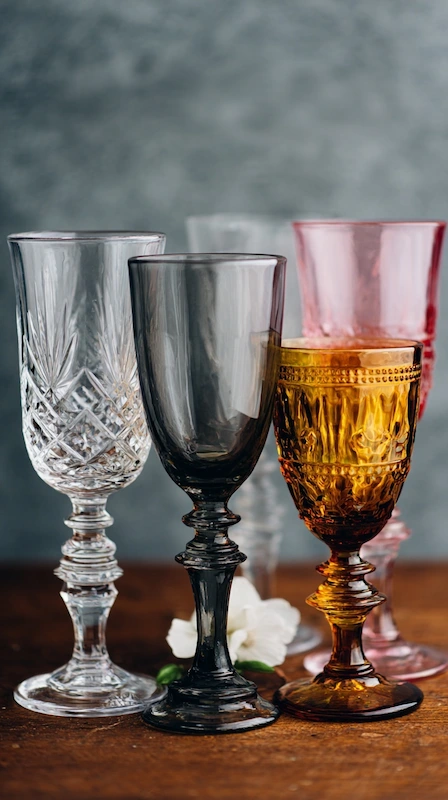
Choose the look that matches the aesthetic of your place settings:
- Classic clear stemware: clean, timeless, works with any palette.
- Cut crystal / etched glass: formal, vintage-inspired, “expensive” on camera.
- Smoked gray glass: modern, moody, great for evening receptions.
- Colored goblets: playful, European garden vibe, high visual impact.
- Intentional mismatched vintage: eclectic but curated.
Decide how many glasses you actually need
More isn’t always better, however, a common setup:
- Water goblet
- Wine glass (white and red wine)
- Champagne flute
Quick rules for cohesion
- Keep shapes consistent (all goblets the same style).
- If using colored glass, limit to one tint (all green, all amber, etc.).
- If mixing vintage, choose one unifying feature: same color, same height range, or same “era.”
Step 2: Choose plates + chargers to frame the glassware
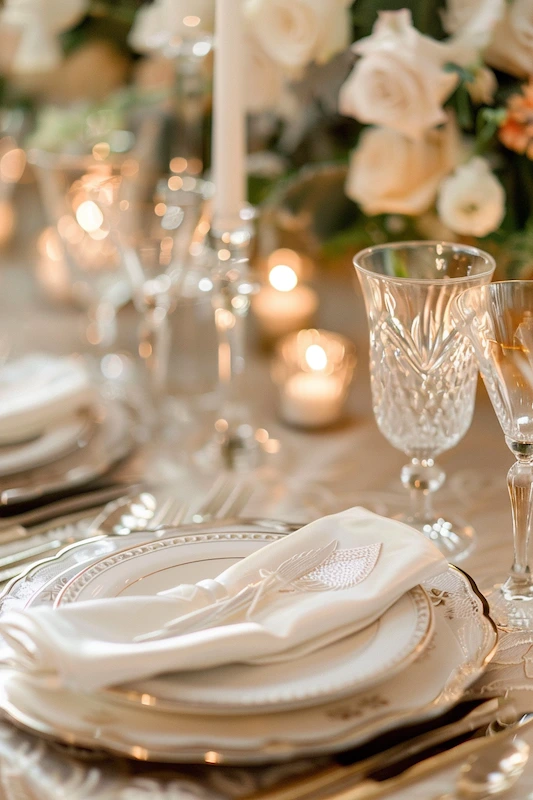
Now that glassware is your anchor, plates and chargers should either support it (quiet, simple choices) or balance it (add texture if the glassware is plain).
If you’re using a 14″ charger, stick to an 11″ dinner plate so you still see a nice border on camera.
Not sure what a charger is? This quick explainer on charger plates.
Choose one “hero” element
- If your glassware is bold (colored or cut crystal) → keep plates more classic.
- If your glassware is simple (basic clear) → plates/chargers can add texture or contrast.
Combinations that photograph well
- Clear glass + white plate + textured charger (woven, rattan, subtle metallic).
- Cut crystal + ivory plate + thin-rim charger (elegant, not busy).
- Smoked glass + stoneware plate + matte charger (modern + moody).
5 Wedding Tablescape “Recipes” You Can Copy (By Vibe + Venue)
Use these like a formula: pick the recipe closest to your venue and aesthetic, then tweak one element (napkin color, candle color, or floral variety) to make it yours.
Recipe 1: Old-Money Ballroom Classic (Black Tie / Hotel Ballroom)

- Color palette: Ivory + black + soft greens (optional gold accents)
- Glassware: Cut crystal or etched clear stemware
- Plates + charger: White or ivory plate + thin gold-rim charger (or mirrored charger for extra candle glow)
- Flatware: Polished silver (or brushed gold if your room leans warm)
- Linens: Floor-length ivory/white linen; napkin in ivory or black (simple fold)
- Candle style: Mostly tapers (10–14″) + scattered clear votives
- Floral style: Low compotes with classic shapes (roses, ranunculus, hydrangea), tight and refined
- Photographing tip: Crystal + silver + candlelight = instant “expensive” in reception photos.
Recipe 2: European Garden Party (Outdoor / Tent / Estate)
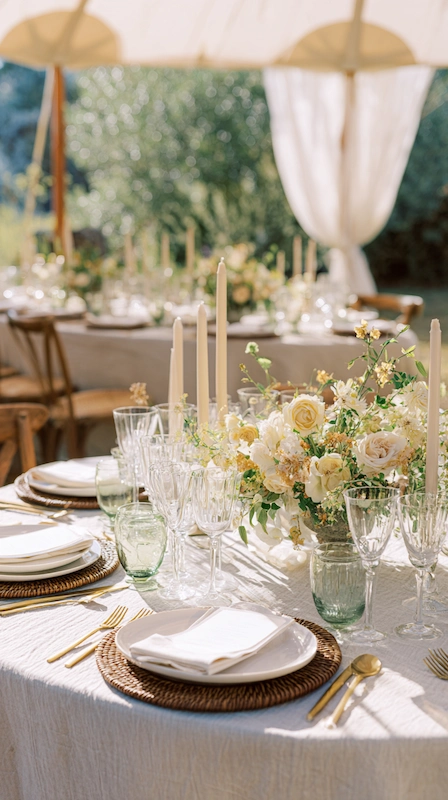
- Color palette: Cream + blush + butter yellow + soft green (or all-white if you want timeless)
- Glassware: Colored goblets (one tint only: sage, amber, or blue)
- Plates + charger: White plate + woven/rattan charger (or scalloped ceramic if you want more charm)
- Flatware: Brushed gold or vintage-style gold
- Linens: Textured linen tablecloth (stone, sand, or pale green); napkin in a soft pastel
- Candle style: Short tapers + lots of votives (wind-friendly) or hurricane-protected candles
- Floral style: Bud vase clusters + a few low arrangements for movement (airy, not tight)
- Photographing tip: Colored glass + woven texture reads “editorial” even with minimal florals.
Recipe 3: Modern Minimal (Loft / Gallery / Rooftop)
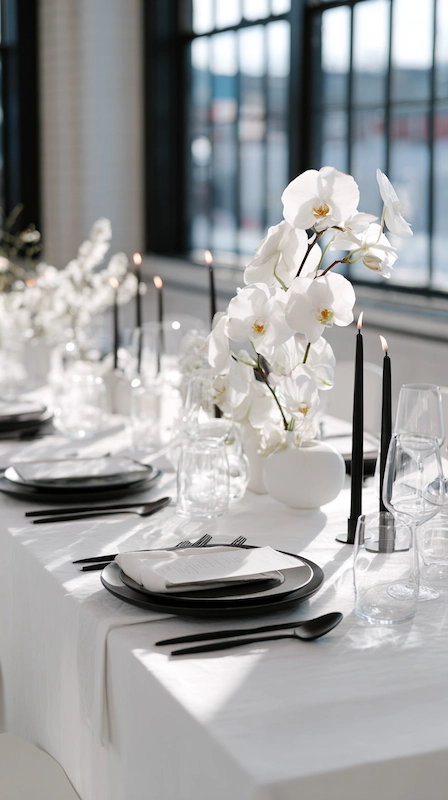
- Color palette: White + black + muted green (or monochrome: all-white/stone)
- Glassware: Clear modern stemless or tall, straight-sided stemware
- Plates + charger: Matte white or stoneware plate + matte black or clear acrylic charger
- Flatware: Matte black
- Linens: Crisp white tablecloth; napkin in charcoal/black (flat fold or simple knot)
- Candle style: Few statement candles (black/white tapers) + minimal votives
- Floral style: Sculptural, single-variety (calla lilies, anthurium, orchids, or modern ikebana)
- Photographing tip: Keep negative space. Too many small items will fight the clean architecture.
Recipe 4: Romantic “Luxury on a Budget” (Any Venue)
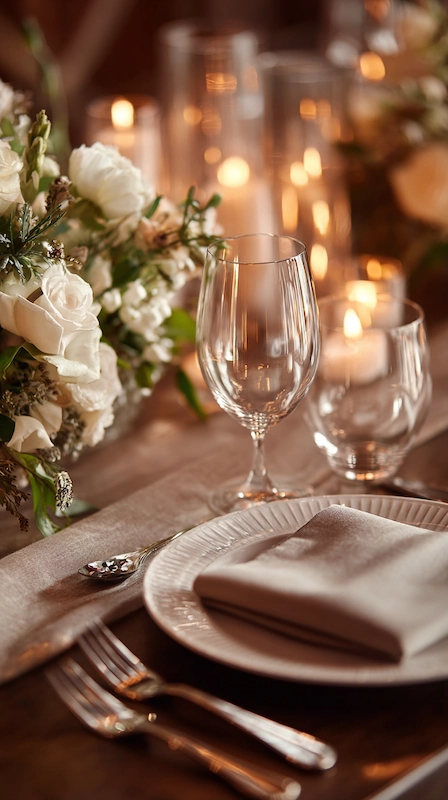
- Color palette: White + champagne + soft green (one accent color max)
- Glassware: Clear classic stemware (upgrade only the water goblet if needed)
- Plates + charger: Standard white plate + one elevated rental: a textured or metallic charger
- Flatware: Standard silver (save here)
- Linens: Neutral tablecloth; napkin in a slightly deeper tone (taupe/champagne) for contrast
- Candle style: Votives-heavy (the cheapest “luxury” hack): 2–4 votives per centerpiece zone
- Floral style: Bud vase clusters (3–7 vases per table) + greenery accents
- Photographing tip: If you can only “splurge” once, do it on glow (votives) and one upgraded layer (charger or goblet).
Recipe 5: Rustic-Refined Barn (Barn / Lodge / Vineyard)
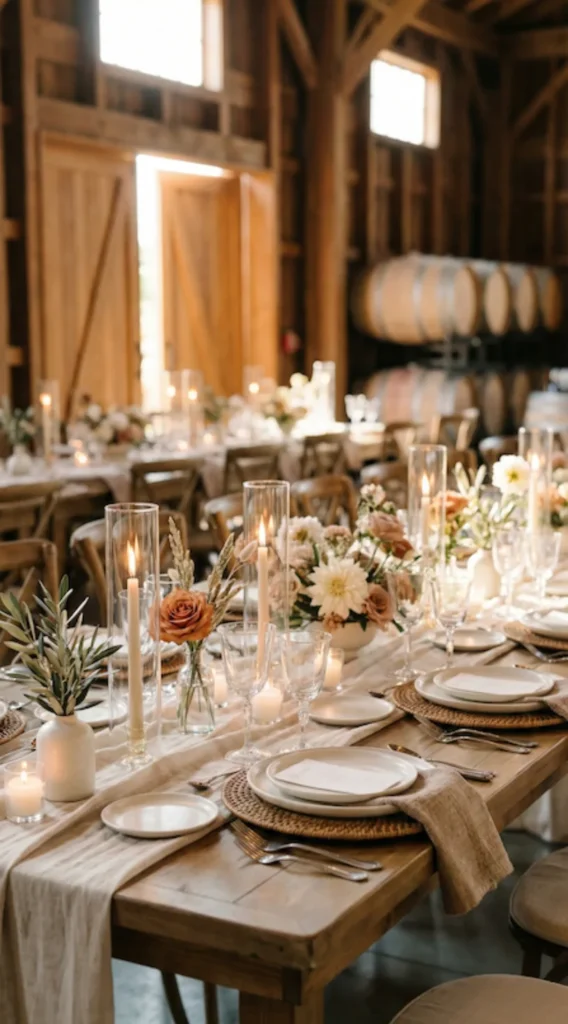
- Color palette: Cream + warm taupe + soft terracotta + greens
- Glassware: Slightly vintage clear or light smoke (avoid super modern shapes)
- Plates + charger: Stoneware plate + wood, rattan, or hammered-metal charger
- Flatware: Brushed gold or antiqued silver
- Linens: Natural linen tablecloth or runner; soft, textured napkin
- Candle style: Hurricane cylinders + votives (prevents wax/ wind issues, looks intentional)
- Floral style: Mixed greens + warm blooms in low vessels (compotes or bud vases)
- Photographing tip: Rustic looks elevated when you add one polished element (glassware or flatware) so it doesn’t feel “theme-y.”
Quick Pick: Choose Your Wedding Tablescape by Venue
- Ballroom: Crystal/etched glass + formal charger + taper candles + compote florals
- Garden/Tent: Colored goblets + woven chargers + bud vases + lots of votives
- Barn/Vineyard: Stoneware + natural linens + hurricanes + warm, textural florals
- Modern Loft: Minimal glassware + matte plates + black flatware + sculptural florals
Rental Upgrade Priorities (So You Don’t Overspend)
If you’re choosing where to invest, upgrade in this order:
Tier 1 (Most visible in photos)
- Glassware (especially the water goblet)
- Candles/votives (glow = luxury)
- Charger or plate upgrade (one hero layer)
Tier 2 (Nice-to-have)
- Flatware finish (gold/black reads styled fast)
- Linens (texture + drape)
Tier 3 (Only if budget allows)
- Paper goods extras (ribbons, wax seals, custom menus at every seat)
Rule of thumb: If your base layers look premium, you can scale florals down and the table still looks “editorial.”
Step 3: Add flatware (the “line work”)
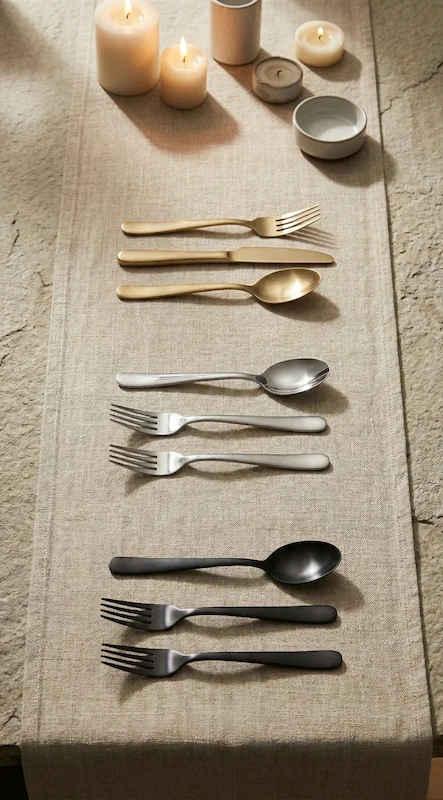
Flatware is like the outline in a drawing; it subtly defines the whole look of your wedding tablescape.
- Gold/brass: warm, romantic, slightly glam.
- Silver: classic and formal.
- Black: modern and graphic.
Step 4: Linens + napkins (create depth)
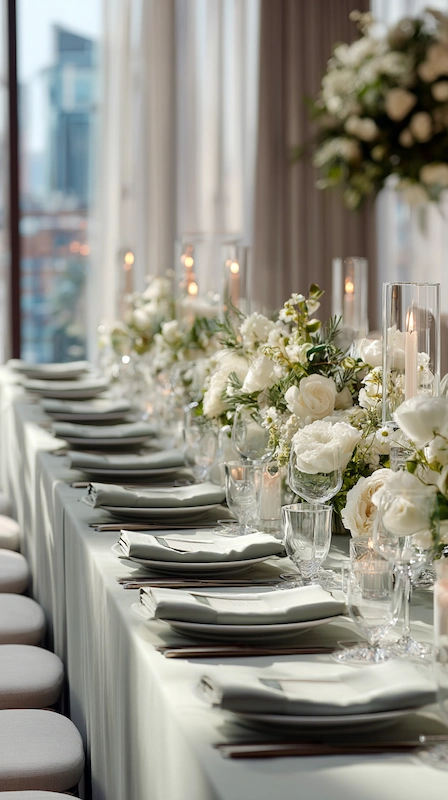
Once your place setting is chosen, linens become a tool for contrast, softness, and color control.
- Skip the runner if your plate combo already has visual weight.
- Use a runner when you need structure for long tables.
- The Texture Rule: Pair ornate glassware with matte linens; pair simple glassware with textured linens.
Step 5: Add paper goods + table identification
Paper goods are where place settings can start feeling cluttered, so use them strategically.
- Menus: One per place feels formal; one per table is streamlined.
- Table numbers: Should be visible from 15 feet away.
- The “one beautiful thing” guideline: A place card can have a ribbon OR a wax seal OR a charm, not all three.
Step 6: Add florals last (yes, last)
Now you choose the centerpiece, but instead of guessing, you’re responding to a table that already has structure. The florals are the “crowning jewel” of your table styling, not the foundation.
- Match florals to the base layers: Bold glassware and patterned chargers demand simpler floral shapes.
- Centerpiece styles: Bud vase clusters, low compote arrangements, or long-table “rhythms.”
Step 7: Final styling pass
- Space test: Can a guest place a salad plate down without moving candles? (If not, remove 2–4 items from the densest area.)
- Glassware test: From a standing view, you should still see the glass silhouettes; don’t bury them behind tall florals.
- Glow test: Add votives in clusters of 3 (single votives look scattered).
Quick Checklist: Backwards Wedding Tablescape Order
- Glassware
- Plates + chargers
- Flatware
- Linens + napkins
- Paper goods + table numbers
- Centerpiece + candles
- Final spacing + glow check
7 Tablescape Mistakes That Make It Look Cheap (Even With Expensive Flowers)
- Not enough candlelight: one or two candles won’t read; use 8+ votives on most tables.
- Too many glasses: if it’s crowded before dinner arrives, it will look chaotic in photos.
- Everything is the same height: mix low + a bit of height (tapers/hurricanes) for dimension.
- Runner + charger + busy napkin + menu at every seat: too many layers compete. Pick one “hero” detail.
- Tiny centerpiece on a big table: scale up with candles and bud vases instead of buying a larger arrangement.
- Random spacing: cluster candles intentionally (groups of 3–5) rather than spreading them evenly.
- Ignoring contrast: if your plates + linens + florals are all the same tone, the table photographs flat, add contrast via napkin, flatware, or glass.
FAQ
Can I still do a big floral centerpiece if I start with glassware?
Yes, starting with glassware doesn’t mean “minimal.” It just ensures the big centerpiece looks intentional with the rest of the table (and doesn’t feel like it’s compensating for mismatched basics).
What if my venue includes basic glassware?
Use it if it fits your look. If it doesn’t, upgrading just the water goblet (the most visible glass) can make a big difference without replacing everything.
How many glasses per place setting is too many?
If guests don’t have room to set down their own drink or the table feels crowded before food arrives, it’s too many. For most weddings, 2 glasses per person is plenty.