Your complete shape guide
12 engagement ring cuts, compared
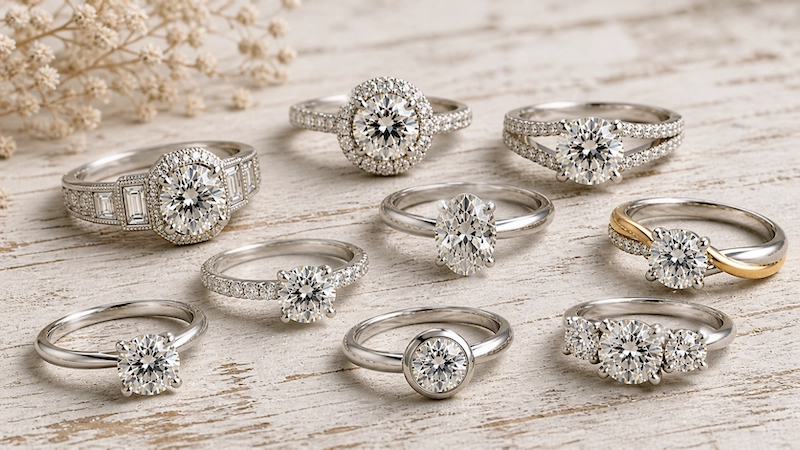
Pick the one that fits how you live. Comparing engagement ring cuts is the first big decision at the jewelry counter, and it shapes everything after it: the sparkle, how large the stone looks on the hand, and the price per carat. Twelve diamond shapes, three ways they play with light, one ring you will look at every single day.
Table of Contents
The three faceting families behind every engagement ring cut
Most diamond shapes in the case sort into one of three cutting styles. Pick the light show you love first, and the shopping list shrinks from twelve to four. Treat the families as a shortcut rather than a rulebook: several shapes are cut more than one way, so the individual stone always has the final word.
Brilliant
Maximum sparkle
Triangular and kite-shaped facets bounce light in every direction. Fire, flash, and forgiveness: small inclusions tend to disappear in the sparkle.
- Round, princess, oval, pear
- Marquise, heart, trillion
Step
Sleek, glassy glow
Long parallel facets create broad flashes and a hall-of-mirrors depth. Architectural, expensive-looking, and unforgiving of low clarity.
- Emerald, Asscher
- Baguette, usually an accent stone
Mixed and variable
Depends on the stone
A step-cut outline with brilliant-style faceting underneath, or a shape cut several different ways. Clean lines on top, fireworks inside.
- Radiant
- Cushion, brilliant or modified depending on the cutter
Cut vs. shape, in one breath. Shape is the outline you see from above: round, oval, pear. Cut means two other things. It is the faceting style, meaning how those facets are arranged and how light moves through the stone, and it is cut quality, the grade a laboratory assigns to how well the stone was made. Everything outside a round brilliant is properly called a fancy shape. Shoppers and search engines both say “engagement ring cuts,” so that is the language used here, but at the counter it pays to ask which of the three someone means. Two ovals can look identical on paper and sparkle completely differently in person.
The 12 engagement ring cuts, one at a time
Each shape gets a headline, the two or three things that matter, and who it suits. Skim the spec strip if you are in a hurry. Eleven of these are center-stone shapes; the baguette is included because you will meet it constantly as a side stone, not because it competes with the other eleven for the middle of the ring.
01 · Brilliant
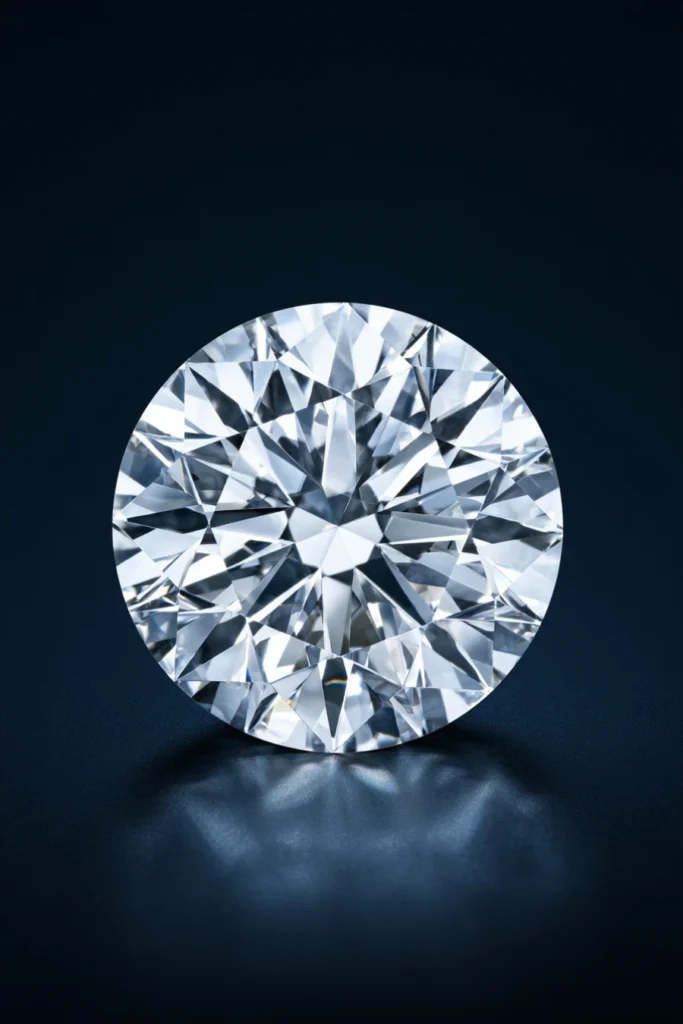
Round Brilliant: the benchmark for sparkle
The most popular diamond shape by a wide margin, and the only one GIA gives an overall cut grade to. Its 57 or 58 facets descend from proportions Marcel Tolkowsky published in 1919, though GIA’s own research found that many different proportion combinations can produce a beautiful round, not one perfect formula.
It suits every setting and every metal, which makes it the safest bet for a surprise proposal. The trade-off is price: cutting a round wastes more rough, and you pay for that.
- SparkleMaximum
- LooksTrue to carat
- Price/ctHighest
- WatchPremium pricing
Best for: classic taste, surprise proposals, anyone who wants zero regrets.
02 · Brilliant
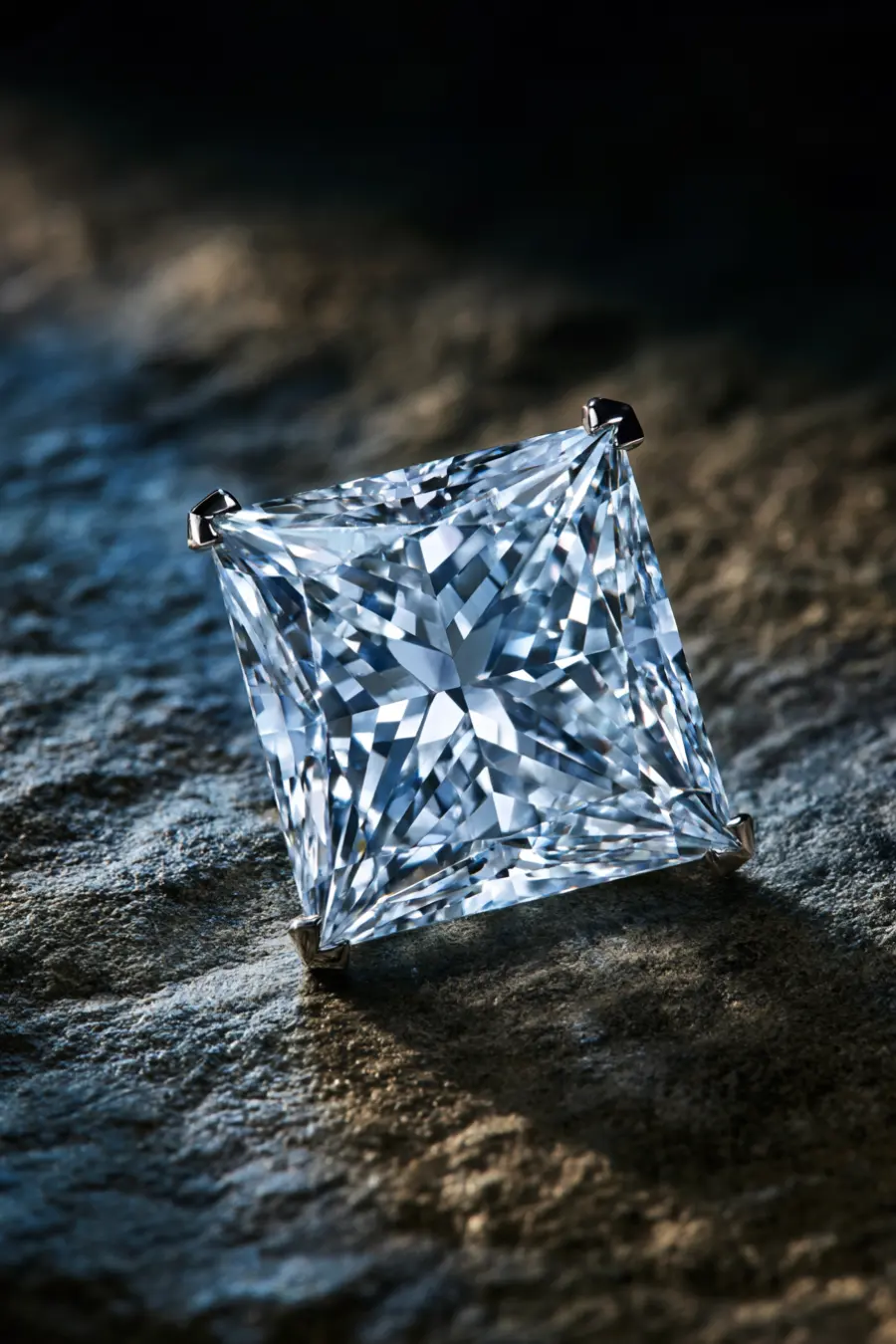
Princess: sharp lines, softer price
A longstanding favorite among fancy shapes. A square with pointed corners and 57 to 76 facets, it sparkles almost like a round and typically costs less per carat.
Princess cuts carry weight deep in the pavilion, so compare millimeter measurements alongside carat weight. And choose a protective setting, such as V-shaped prongs, split prongs, or a bezel, to safeguard those four corners.
- SparkleHigh
- LooksCan read smaller
- Price/ctMid
- WatchCorners chip
Best for: modern, geometric style on a smarter budget.
03 · Brilliant
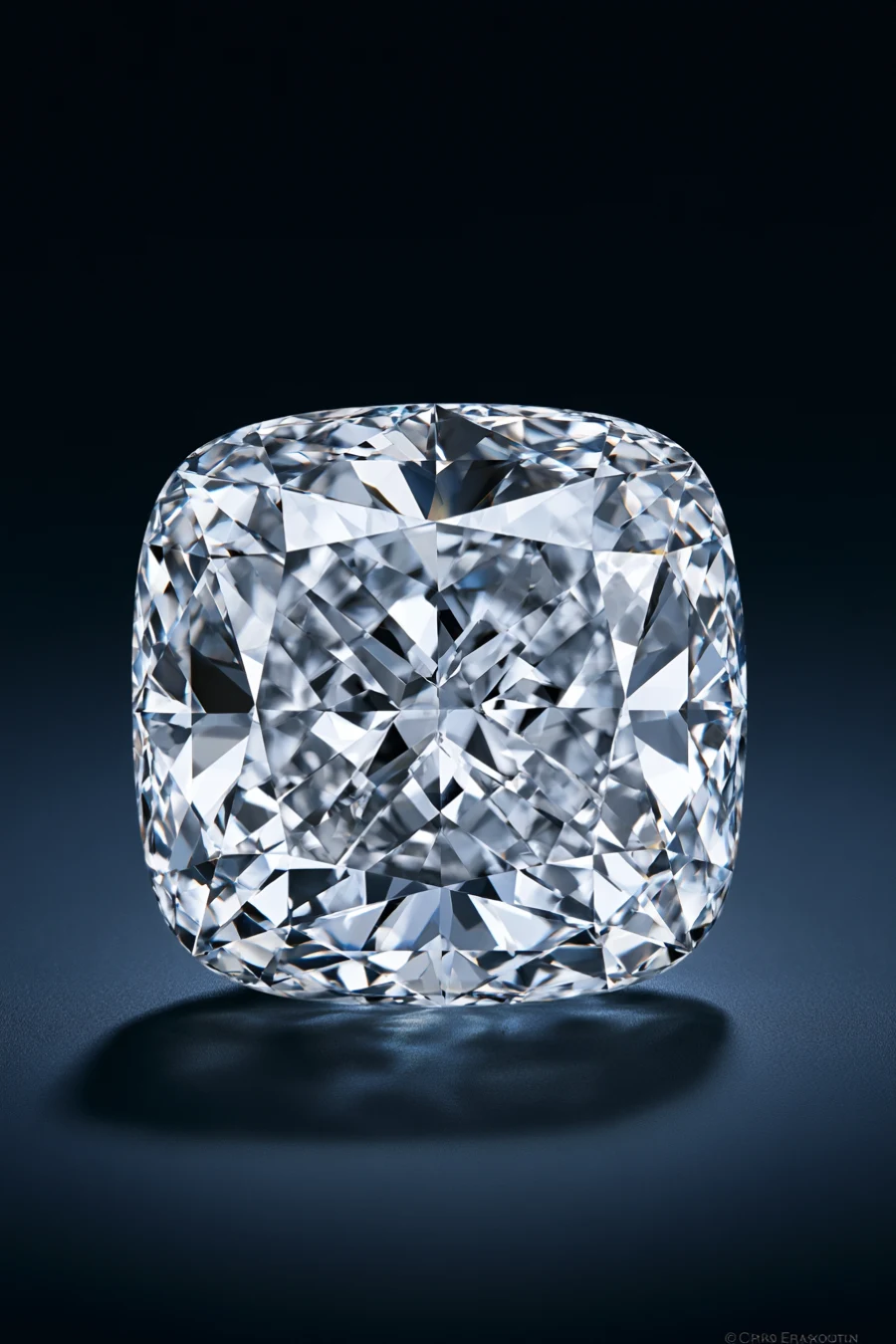
Cushion: romance with an antique soul
Rounded corners and a pillow silhouette that traces back to the Old Mine cuts of the 1700s. It reads soft, warm, and a little vintage, even in a modern setting.
Faceting varies more than any other shape. Traditional cushions give broad flashes; modified cushions give a busy crushed-ice look. Watch videos of each stone before you fall in love.
- SparkleSoft glow to crushed ice
- LooksSlightly smaller
- Price/ctMid
- WatchFacet patterns vary
Best for: vintage-leaning romance, and anyone who finds a round too sharp. Trend Alert: the elongated cushion keeps the soft corners and flatters the finger like an oval. Ask to see both.
04 · Brilliant
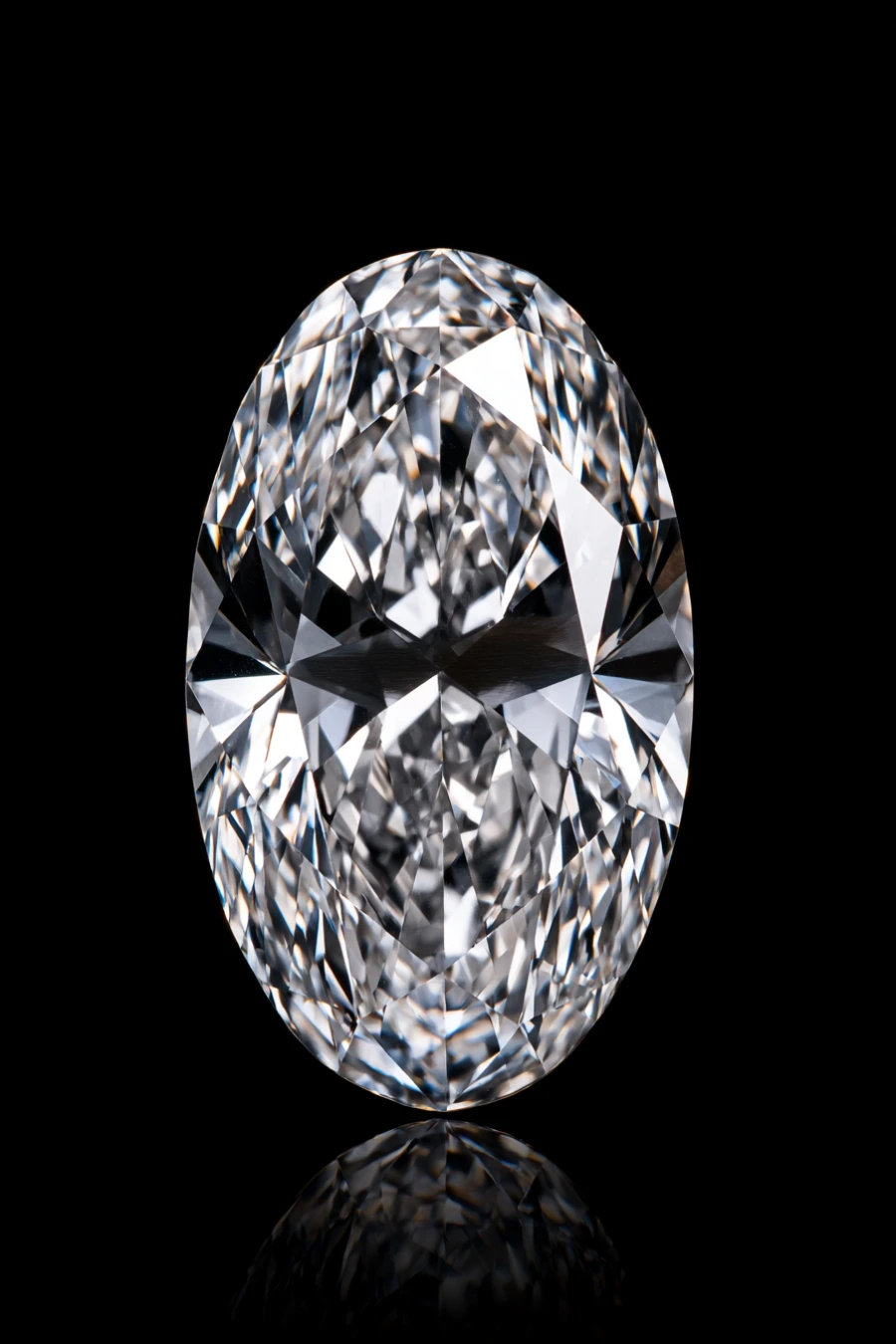
Oval: round-brilliant sparkle, bigger look
Refined by Lazare Kaplan in the late 1950s and one of the most requested shapes of the past decade: brilliant faceting on a stretched outline. Expect fire in the same family as a round, a larger face-up spread at the same carat weight, and a line that lengthens the finger.
Nearly every oval carries some bow-tie shadow across its center. Faint is normal. Dark and obvious means pass on that stone.
- SparkleHigh
- LooksLarger
- Price/ctMid-high
- WatchBow-tie shadow
Best for: elongating the hand, and a shape that tends to photograph beautifully.
05 · Brilliant
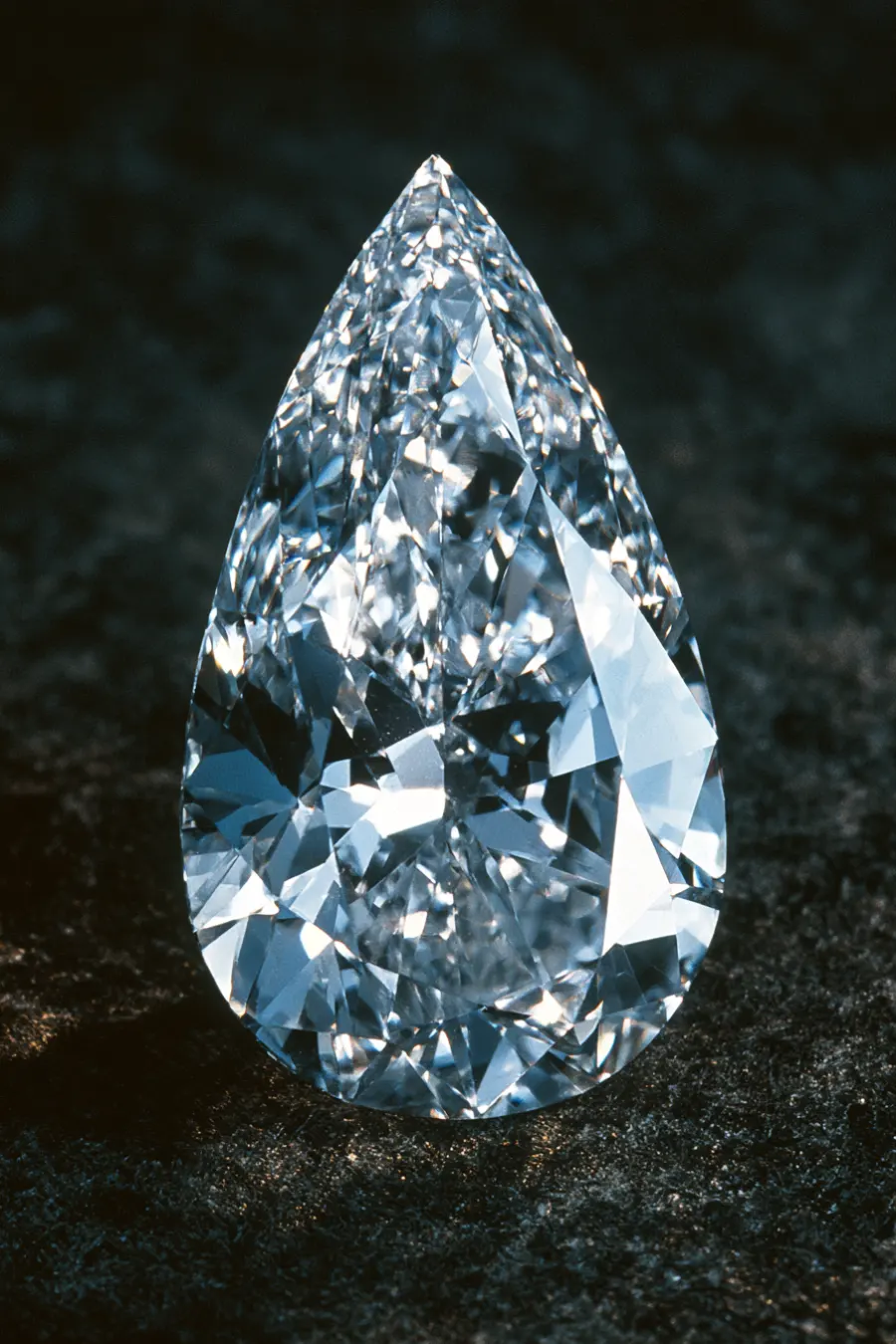
Pear: the teardrop that wears two ways
One rounded end, one tapered point, and a lineage that reaches back to the 1400s. Point toward the fingertip to lengthen the hand, point down for something bolder.
A generous surface area makes pears look bigger than their weight. A V-shaped prong or protective bezel over the tip helps guard its most vulnerable point.
- SparkleHigh
- LooksLarger
- Price/ctMid
- WatchPoint needs a prong
Best for: someone who wants distinctive without going full statement.
06 · Brilliant
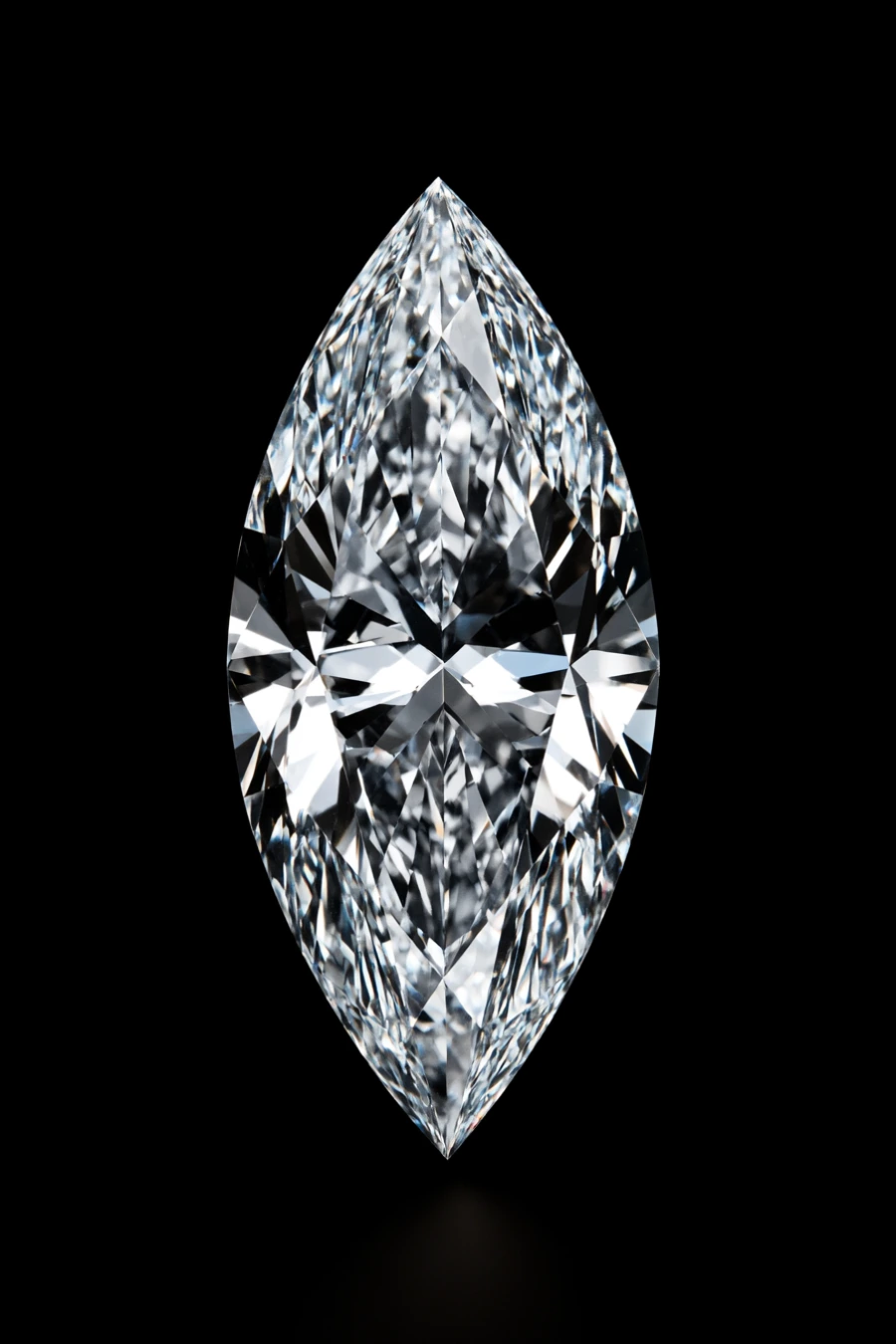
Marquise: often the biggest look per carat
An elongated ellipse with two points, said to be commissioned by Louis XV to echo the smile of the Marquise de Pompadour.
Royal gossip aside, its strength is face-up size. Marquise diamonds are often among the largest-looking shapes at a given carat weight, and the elongated line slims the finger while it does it.
- SparkleStrong
- LooksAmong the largest
- Price/ctMid
- WatchTwo points to protect
Best for: maximum visual size, and a shape you will rarely see on someone else.
07 · Step
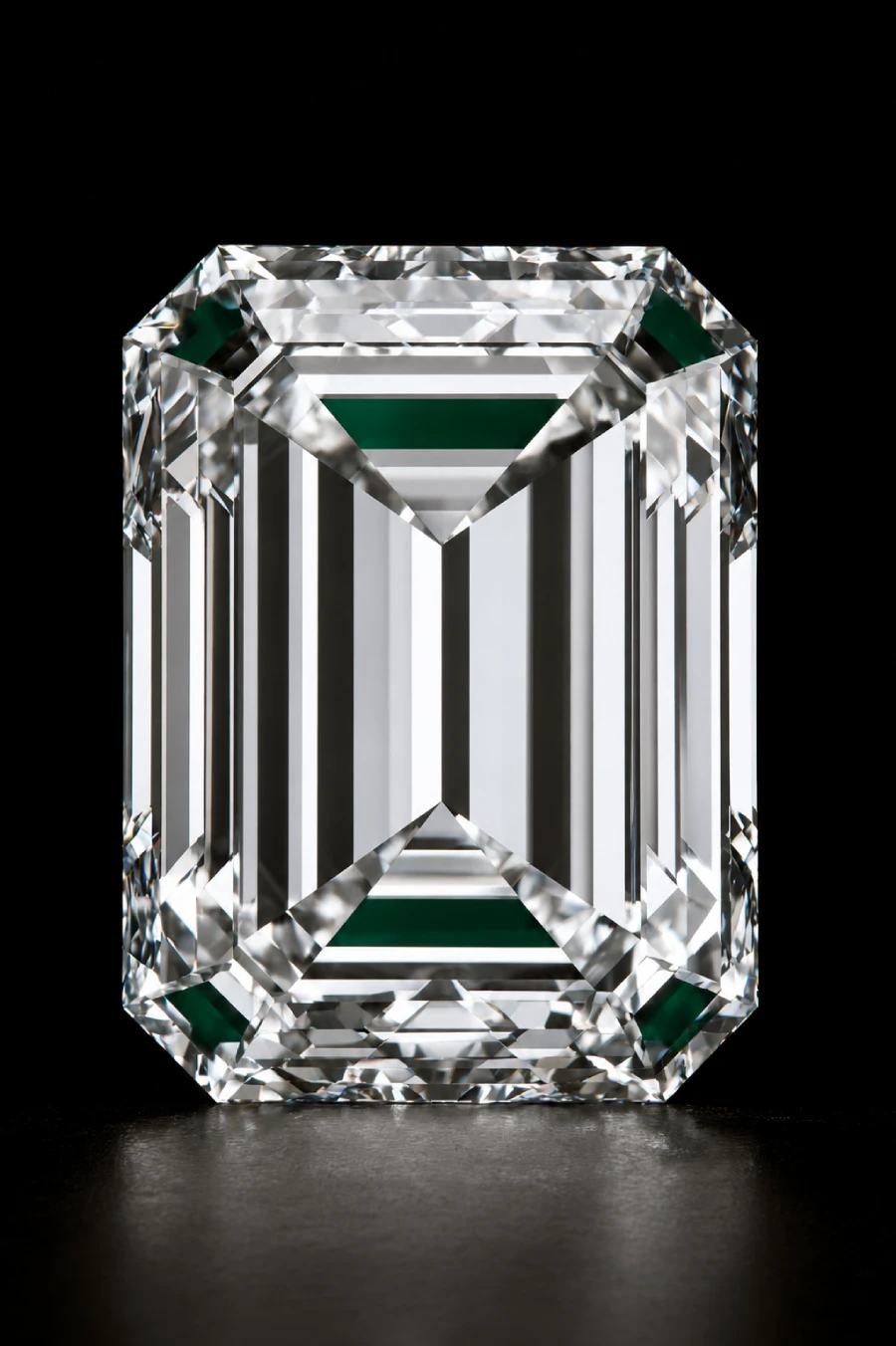
Emerald: the quiet luxury cut
The icon of the step cuts: a rectangle with cropped corners and 57 long, parallel facets. Instead of sparkle it delivers broad, dramatic flashes, the hall-of-mirrors effect worn by old Hollywood and modern minimalists alike.
Those open facets are windows into the stone. Inclusions and lower color show, so prioritize clarity. The reward: a lower price per carat and a big, elegant spread.
- SparkleGlassy flashes
- LooksOften larger
- Price/ctLower
- WatchShows inclusions and color
Best for: sleek, architectural style and a wardrobe of neutrals.
08 · Step
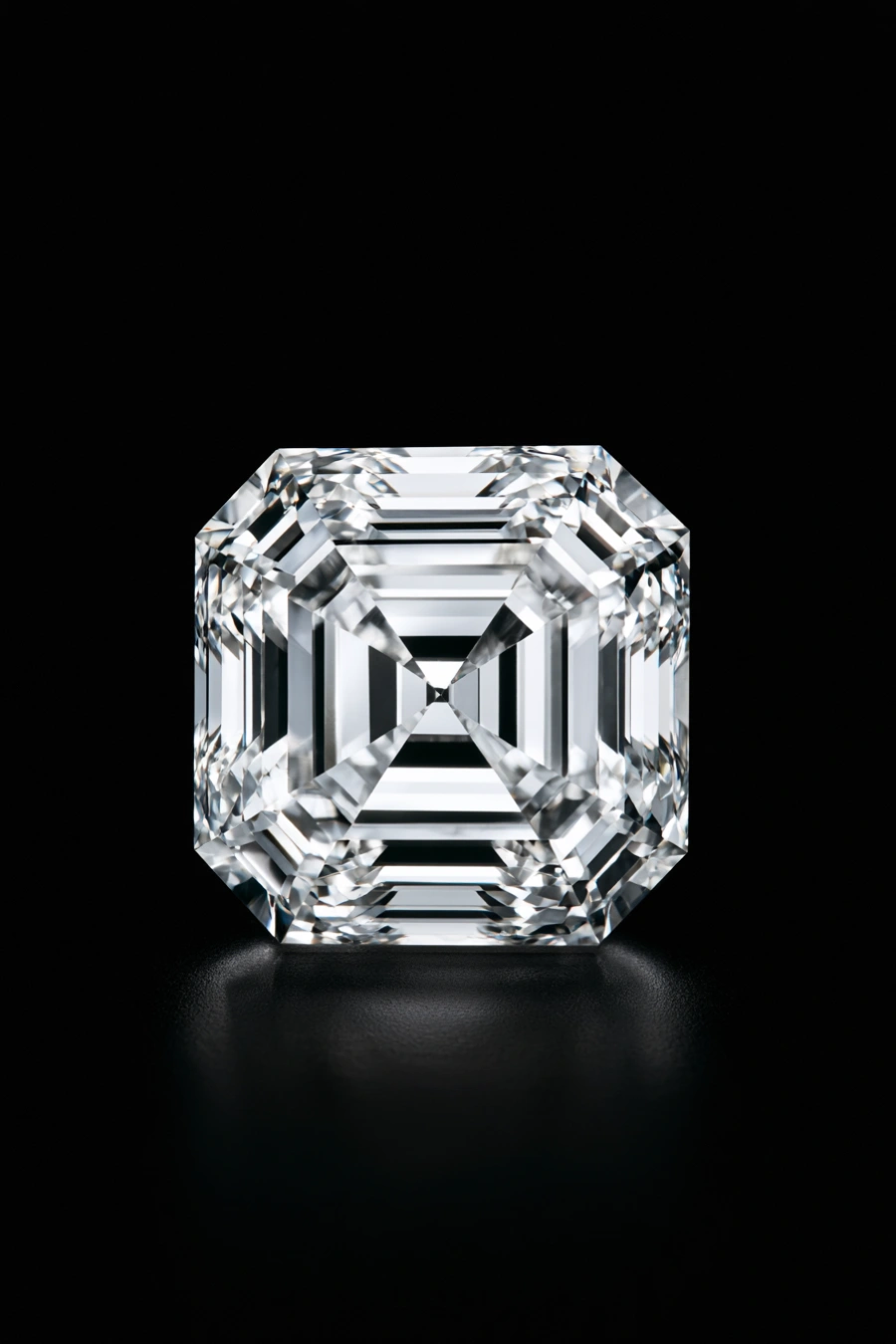
Asscher: pure 1920s glamour
The emerald cut’s square sibling, created by the Asscher brothers in 1902. A high crown and deep pavilion create a windmill pattern that pulls your eye into the center.
It will never out-sparkle a round and is not trying to. Its beauty is structural. Inspect the stone carefully for an eye-clean appearance, then set it in a bezel or a geometric halo.
- SparkleDeep windmill glow
- LooksCan read smaller
- Price/ctMid
- WatchShows inclusions
Best for: Art Deco lovers and vintage-fashion partners.
09 · Mixed
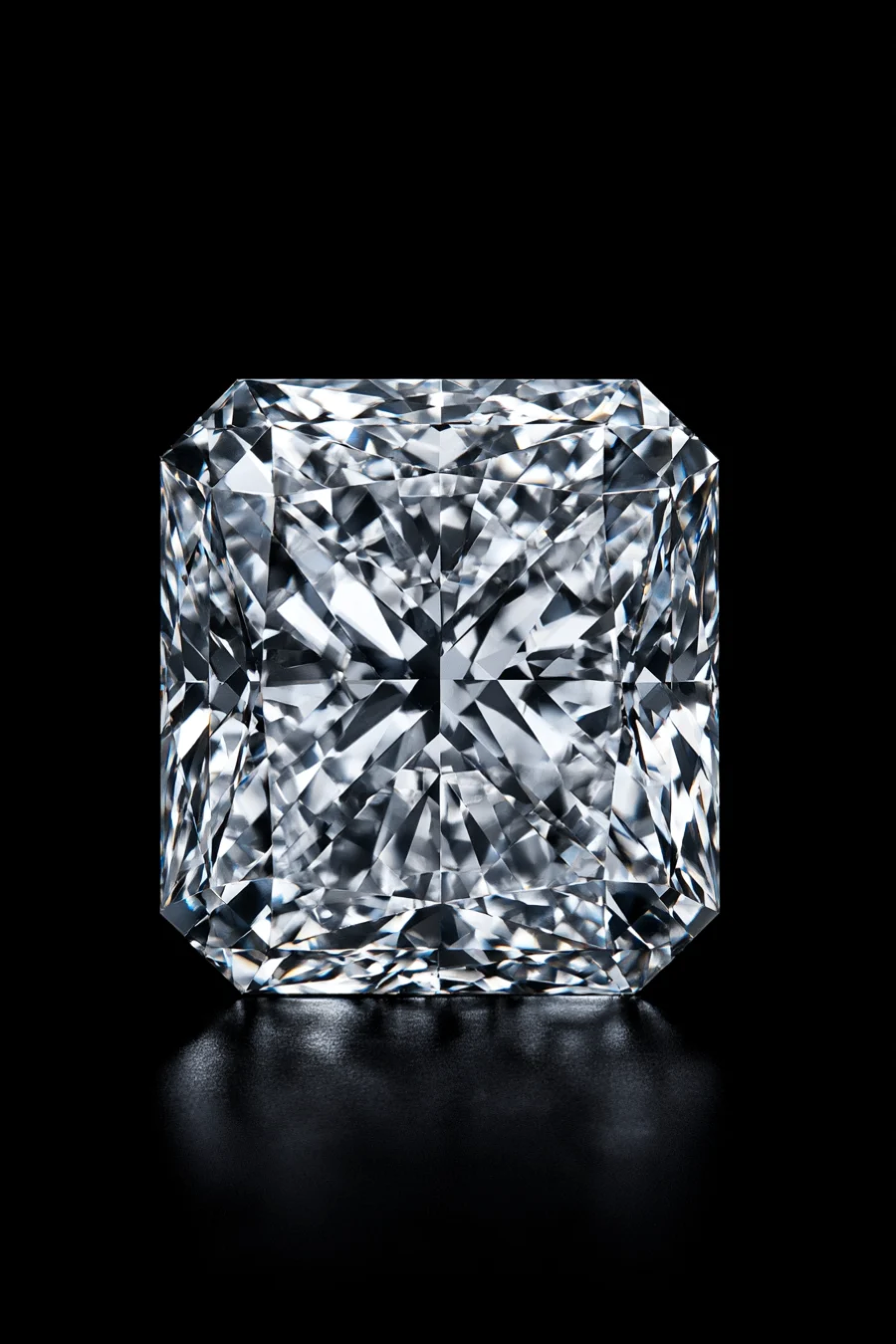
Radiant: clean lines, full fireworks
The newest of the classic shapes. Henry Grossbard’s 1977 invention pairs the emerald cut’s trimmed-corner outline with roughly 70 brilliant-style facets, which typically makes it the liveliest of the straight-edged shapes.
Cropped corners mean no exposed points, which removes the most obvious chipping risk. That is one factor, not a guarantee: girdle thickness, inclusions near the edge, and the setting matter just as much.
- SparkleVery high
- LooksClose to true size
- Price/ctMid
- WatchCut quality varies
Best for: a modern look with vintage bones.
10 · Brilliant
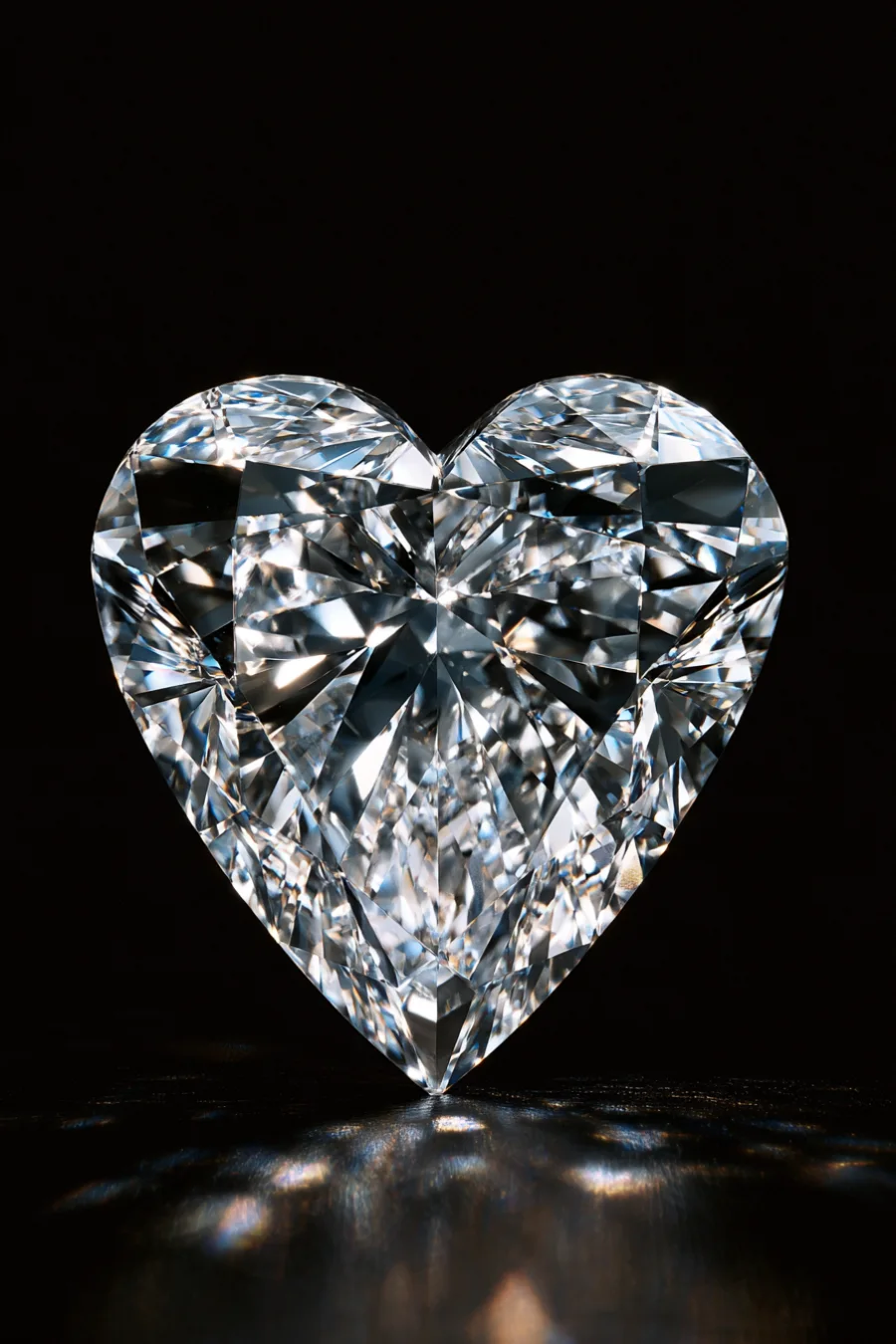
Heart: says exactly what you mean
One of the hardest shapes to cut well, because both halves must mirror each other perfectly. A good one is a small feat of craftsmanship.
Hearts need size to read as hearts on the hand. Most jewelers suggest half a carat or more, especially in a solitaire.
- SparkleGood
- LooksNeeds size to read
- Price/ctMid
- WatchSymmetry is everything
Best for: an unapologetically romantic statement.
11 · Step
Baguette: the minimalist’s line of light
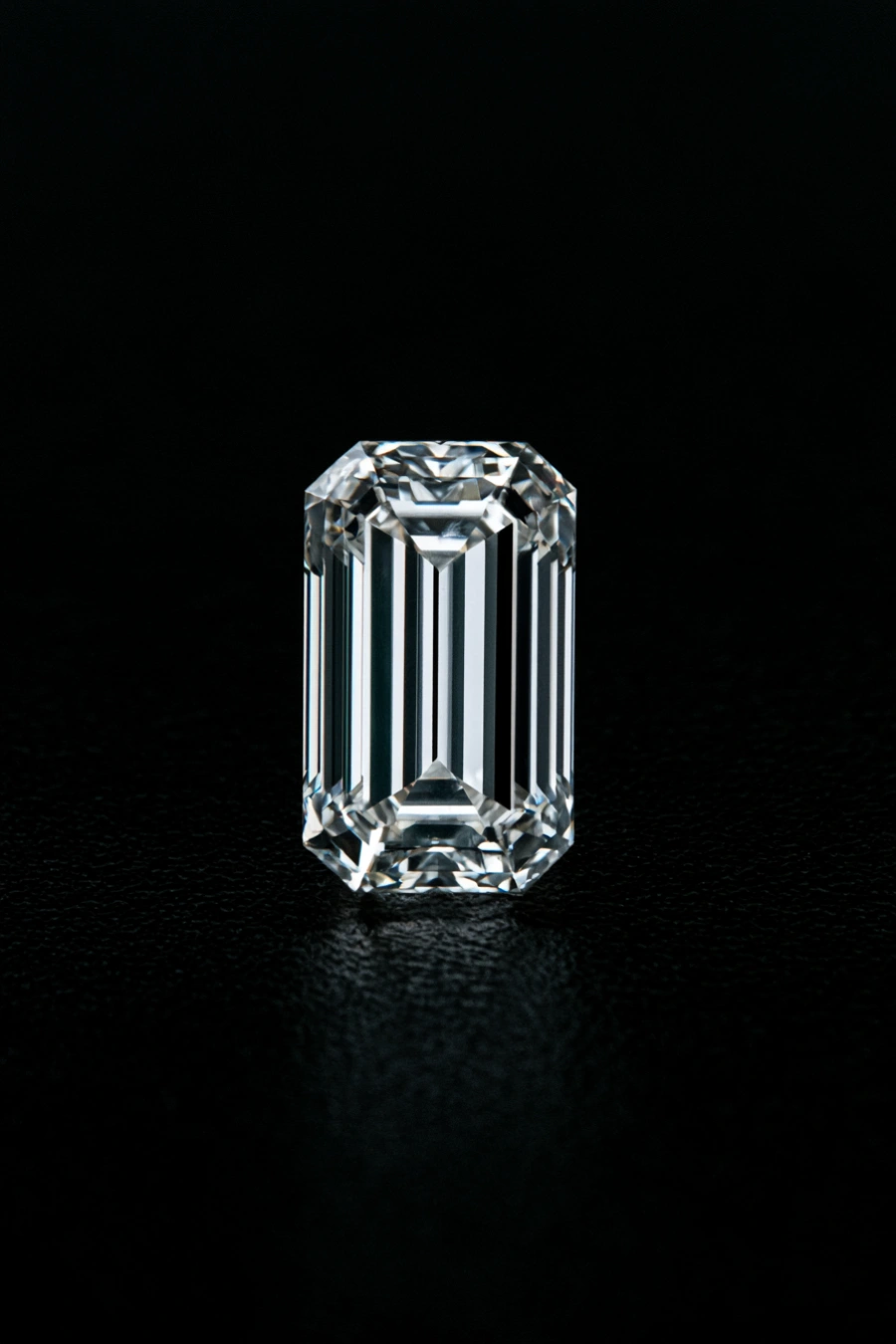
Primarily an accent stone rather than a center stone, which is why it is not really comparable to the eleven above. A slim rectangle with just 14 facets, it does not sparkle so much as glow in one clean line, which is why it shines flanking a center stone or channel-set along a band.
On its own it makes a striking minimalist ring for someone who finds big sparkle fussy. Clarity matters more here than in almost any other small stone.
- SparkleSubtle linear
- LooksSmallest
- Price/ctLower
- WatchHides nothing
Best for: accents, stacking, and quiet, editorial style.
12 · Brilliant
Trillion: bold, geometric, uncommon
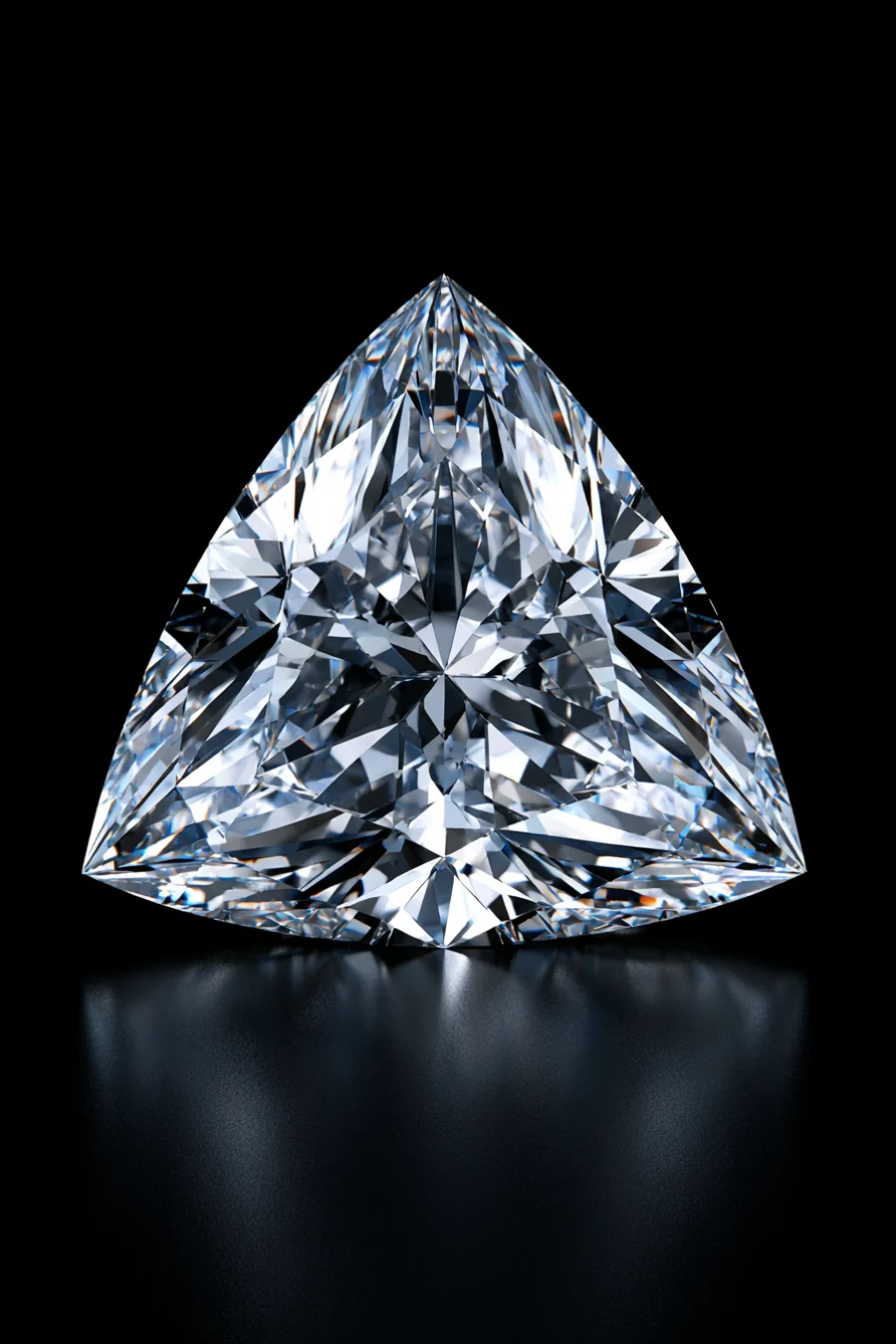
The least common shape here: a triangle with three equal sides and 31 to 50 facets. You still see far fewer of these than rounds or ovals, which is exactly the point.
Trillions are typically cut shallow, so their weight spreads wide and they look bigger than they are. Stunning as a solitaire, and just as good framing a center stone.
- SparkleBold
- LooksLarger
- Price/ctMid
- WatchThree corners to protect
Best for: the couple who wants something nobody else has.
The numbers that matter more than carat weight
Carat is weight, not size. When couples compare engagement ring cuts they almost always compare carats, and that is the wrong number. Three other figures on the report tell you what the ring will actually look like on the hand, and most shoppers never ask for them.
Number 1
Length-to-width ratio
Divide length by width and you get the silhouette in a single figure. It is the difference between a plump oval and a stretched one, and it is a taste decision, not a quality grade.
- Oval: 1.30 to 1.50 reads classic, above 1.60 reads dramatic
- Emerald: 1.30 to 1.50 for a balanced rectangle, 1.00 for a square
- Marquise: around 1.85 to 2.10
- Pear: 1.45 to 1.75
- Cushion and princess: 1.00 to 1.09 for square, 1.10 and up for elongated
Number 2
Face-up millimeters
Two one-carat stones can differ by a full millimeter across the top depending on shape and how deep the cutter left the pavilion. Millimeters are what your eye sees; carats are what the scale sees.
- Ask for length x width x depth on every stone
- Consider face-up measurements alongside carat weight, not carat weight on its own
- A deep stone hides weight underneath the setting where nobody sees it
Number 3
Color, and how the shape shows it
The same color grade looks different from shape to shape. Faceting either scatters body color or pools it, so the grade you can comfortably drop to depends on what you are buying.
- Brilliant shapes such as round and princess tend to mask a touch of warmth
- Step cuts such as emerald, Asscher and baguette show body color more openly
- Elongated shapes such as oval, pear and marquise often concentrate color at the tips
- Warm metals flatter lower color grades; platinum and white gold expose them
Key Takeaway on grading reports. Not all grading reports say the same thing. GIA currently assigns an overall cut grade only to standard round brilliants, while some laboratories, including IGI, also grade certain fancy shapes. IGI evaluates fancy shapes using polish, symmetry, proportions, craftsmanship, and light return, assigning grades from Excellent to Poor. Terminology differs between laboratories, so an “Ideal” on one report is not automatically the same standard as an “Excellent” on another. Compare stones graded by the same laboratory whenever you can, and treat a report from an unfamiliar lab as a reason to ask more questions rather than fewer.
How to compare engagement ring cuts in the store
Six steps, in order. Work through the engagement ring cuts this way and the appointment takes 45 minutes instead of three.
1
Choose the light show first
Brilliant, step, or mixed. This one decision removes most of the twelve shapes from the conversation before you sit down.
2
Pick two silhouettes, not one
Bring a favorite and a runner-up. An oval and an elongated cushion, or an emerald and a radiant. Seeing them side by side on the hand is what settles it.
3
Compare millimeters, not carats
Two stones of the same carat weight can differ by a full millimeter face-up. Ask for the length, width, and depth of every stone you are shown, and ask for the length-to-width ratio on any elongated shape.
4
Check the cut grade, then watch the video
For round brilliants, check the laboratory’s overall cut grade. GIA currently assigns that grade only to standard round brilliants, while some laboratories, including IGI, also grade certain fancy shapes. Watch the wording too: GIA’s top cut grade is Excellent, while “Ideal” comes from other laboratories, so terms on two reports are not always interchangeable. For any fancy shape, inspect the stone in motion and check its measurements, symmetry, polish, bow tie, windowing, and dark areas.
5
Match the setting to the shape
Pointed or sharp-cornered shapes, including pear, marquise, princess, heart and trillion, need protective settings such as V-prongs or bezels. Step cuts often pair beautifully with clean bezels and solitaires. Ask to see the shape in the setting you actually plan to buy.
6
Ask about durability, not just outline
Shape is only one durability factor. Ask the jeweler to check girdle thickness, inclusions near the edge, and whether the setting adequately protects vulnerable points and corners. GIA recommends V-prongs or similar protection for exposed points, and how you use your hands day to day matters as much as the silhouette does.
Pro Tip. Every shape compared here has a row in the table at the bottom. Screenshot it and use it as your checklist at the counter.
Key Takeaway on price. Round brilliants typically cost the most per carat because cutting one wastes the most rough diamond. Elongated shapes such as oval, pear, marquise, and emerald usually deliver the largest look for the money, and princess cuts often undercut rounds by a noticeable margin at the same carat weight.
One more variable that swamps all of this: origin. Laboratory-grown diamonds sell for a fraction of comparable natural stones, and that gap has widened considerably in recent years. A shape that is out of reach as a natural stone may be entirely affordable as a lab-grown one, so decide on origin before you let price steer you away from a silhouette you love.
The Highest, Mid and Lower labels in this guide describe broad tendencies among otherwise comparable diamonds. Actual prices vary by origin, carat weight, cut quality, color, clarity, the grading report, retailer, and current inventory.Start from what you want, not from the case
Three shopper profiles, three shortlists of engagement ring cuts. Find yours and skip the rest.
Profile 1
I want maximum sparkle
You love fire and flash and want the ring to read from across the room.
- Round brilliant
- Radiant
- Princess
- Oval
Profile 2
I want the biggest look per dollar
You would rather have spread than a bigger number on the grading report. Elongated shapes are your friend.
- Marquise
- Oval
- Pear
- Emerald
Profile 3
I want something nobody else has
You dress for yourself and want a ring that starts conversations.
- Asscher
- Trillion
- Heart
- Elongated cushion
All 12 engagement ring cuts, side by side
Save this chart to Pinterest and bring it to your first appointment. Comparing stones is easy when you already know each shape’s trade-offs. Face-up appearance below assumes stones of equal carat weight.
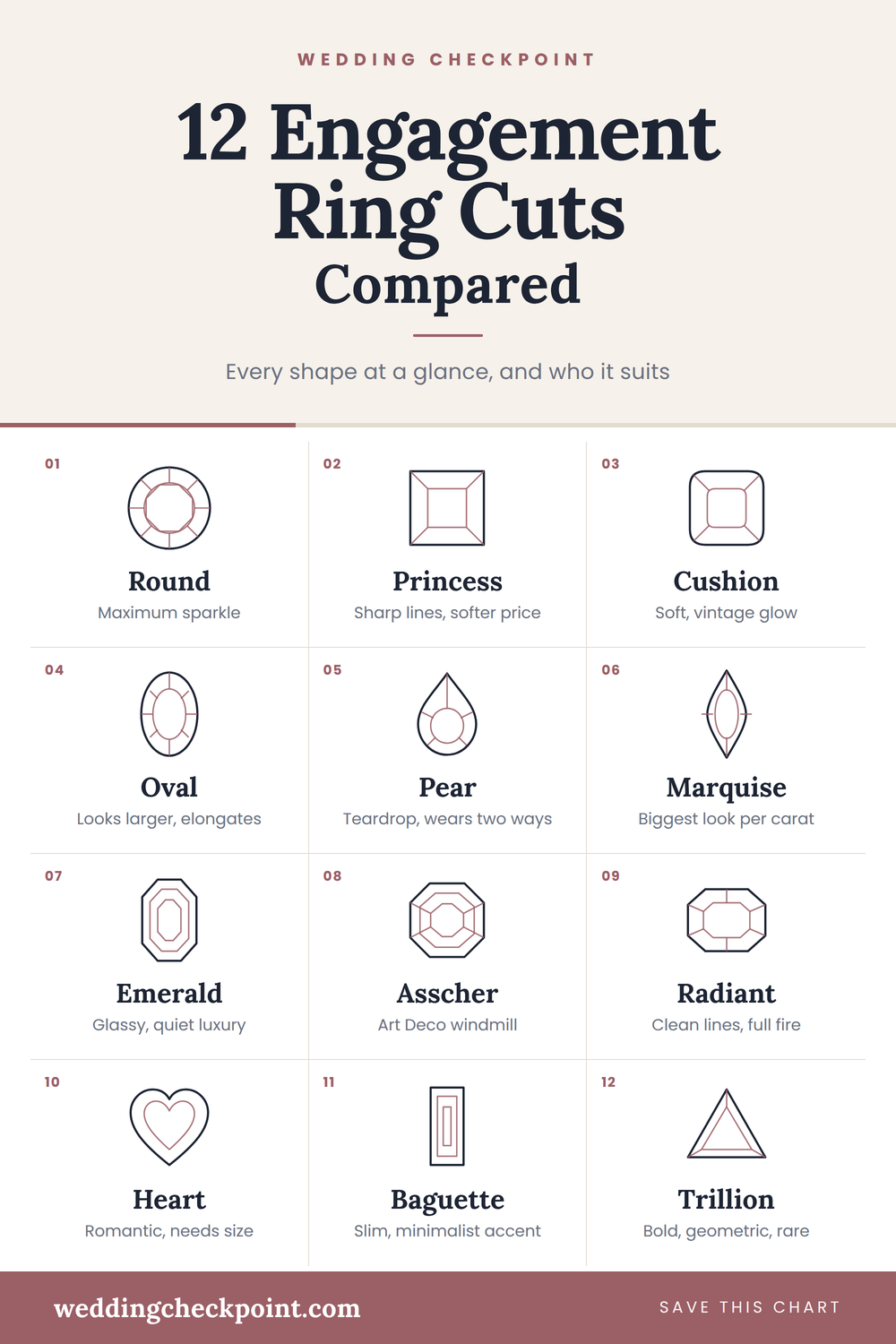
| Shape | Faceting style | Sparkle character | Face-up appearance | Watch out for | Best suited to |
|---|---|---|---|---|---|
| Round Brilliant | Brilliant | Maximum fire and sparkle | True to carat weight | Typically higher price per carat | Classic, timeless styles |
| Princess | Brilliant | Sharp, lively sparkle | Can look smaller than expected | Corners need protective prongs | Modern, geometric looks |
| Cushion | Brilliant or mixed, varies by cutter | Soft glow to crushed ice | Can look slightly smaller | Facet patterns vary widely | Vintage, romantic styles |
| Oval | Brilliant | High brilliance | Looks larger | Bow-tie shadow | Elongating the finger |
| Pear | Brilliant | High sparkle | Looks larger | Point needs protection | Distinctive, versatile wear |
| Marquise | Brilliant | Strong brilliance | Among the largest looks | Points need protection | Maximum visual size |
| Emerald | Step | Broad, glassy flashes | Often looks larger | Shows inclusions and color | Sleek, sophisticated styles |
| Asscher | Step | Deep, windmill glow | Can look smaller | Shows inclusions | Art Deco, vintage lovers |
| Radiant | Mixed | Very high sparkle | Close to true size | Cut quality varies | Sparkle with clean lines |
| Heart | Brilliant | Good sparkle | Needs size to read clearly | Symmetry is critical | Romantic statements |
| Baguette (accent stone) | Step | Subtle linear flashes | Looks smallest | Shows inclusions | Accent stones, minimalists |
| Trillion | Brilliant | Bold, geometric sparkle | Looks larger | Corners need protection | Unique statements, accents |
Engagement ring cuts FAQ
The questions couples ask about engagement ring cuts at the counter, answered in a sentence or two.
Which Diamond Cut Sparkles The Most?
The round brilliant is the benchmark for sparkle because its standardized faceting is designed to produce strong brightness, fire, and scintillation. Its modern proportions were influenced by Marcel Tolkowsky’s 1919 work, although many proportion combinations can produce an excellent-looking round.
If you want top sparkle in a non-round shape, the radiant and princess cuts come closest, since both use brilliant-style faceting.
What Diamond Cut Looks Biggest?
The marquise is often among the largest-looking shapes at a given carat weight. Oval and pear diamonds can also provide generous face-up size, although the individual stone’s depth and measurements matter more than shape alone.
These elongated shapes can also visually lengthen the finger.
Does Diamond Shape Affect Resale Value?
Shape can influence demand, but it is only one part of a diamond’s resale value. Carat weight, color, clarity, craftsmanship, condition, the grading report, and the state of the resale market all matter.
You’re better off choosing a shape you genuinely love rather than treating a diamond as an investment. If resale is important to you, ask an independent appraiser how comparable graded stones perform in the secondary market.
Which Diamond Cut Is The Most Expensive?
The round brilliant is often one of the most expensive shapes per carat. Demand is the biggest driver, but there’s a production reason too: cutting a round brilliant wastes more of the rough diamond than nearly any other shape, and that loss is priced into the stone.
If you love the round look but want more diamond for your budget, consider an oval, pear, or elongated cushion instead.
Which Diamond Cut Sparkles The Least?
Step cuts emphasize broad flashes of light rather than intense sparkle. Baguettes are especially subtle because their long, simple facets create restrained linear reflections. Emerald and Asscher cuts produce a stronger hall-of-mirrors effect, but still sparkle differently from brilliant cuts.
Remember that this is by design. Step cuts trade fireworks for clarity, elegance, and that sleek architectural glow.
Which Diamond Cut Looks The Smallest?
The baguette cut generally looks the smallest because of its slim proportions and minimal faceting. Among center-stone shapes, deeper cuts like the Asscher and some princess and cushion cuts can also look smaller than their carat weight, since more of their mass sits below the surface where you can’t see it.
The bottom line on engagement ring cuts
There is no single best diamond shape, only the best one for the two of you. Choose the light show first, then the silhouette that suits the hand, then judge individual stones on cut quality, measurements, and clarity. Do it in that order and you will shop like someone who has done this before.
How we compare and where the guidance comes from
So you know which parts of this comparison are opinion and which are on the record.
How the comparisons were made. Sparkle character, face-up appearance and price tendencies describe how these shapes generally behave when the other variables are held steady, drawn from gemological grading practice and from what actually shows up in retail cases. The engagement ring cuts covered here are compared as categories, so these are starting points for a conversation with a jeweler, not grades for any individual stone. Every diamond is cut by a person and has to be judged on its own report, its own measurements, and its own video.
Primary sources. GIA on diamond cut, GIA on what its cut grade covers, GIA on diamond quality factors, GIA on protecting a diamond from chipping, and IGI on cut grading for fancy shapes.
Nothing here is an appraisal or a valuation. Prices move constantly and vary by origin, grade, retailer, and market.Keep reading
Lab-grown diamond engagement rings
Pros, cons, cost, and what to know before you buy.
Keep reading
Antique and vintage engagement rings
The complete buyer’s guide to heirloom sparkle.
Keep reading
Personalize your engagement ring
Engravings, settings, and details that make it yours.