35 Spring Wedding Centerpieces With Flower Pairings Brides Can Actually Use
If you’re searching for spring wedding centerpieces that feel fresh, romantic, and truly seasonal, start with what spring does best: tulips, daffodils, ranunculus, anemones, sweet peas, lilac, and other blooms that naturally look “just picked.” The key is choosing flowers that complement each other in shape, movement, and texture so your tables feel curated, not cluttered.
Below are 35 centerpiece ideas. Each includes a flower pairing and a two-sentence explanation you can share with your florist. You’ll also see natural wording you might hear in real consultations, like spring centerpieces, wedding table flowers, and seasonal centerpieces.
Before You Start, 4 Quick Tips for Spring Wedding Centerpieces

- Go low or go tall so guests can easily see each other across the table.
- Spring staples that mix beautifully include tulips, daffodils, ranunculus, anemones, sweet peas, lilac, hyacinth, hellebores, viburnum, and stock.
- If you want candlelight, check open-flame rules first. Hurricanes or LED solve most issues.
- For outdoor receptions, choose sturdier stems like ranunculus, roses, and stock. Heavier vessels help keep everything stable in the wind.
Bud Vase Centerpieces (Simple, Scannable, Easy to Replicate)
1) Mismatched Bud Vase “Meadow”

Flower recipe: tulips, ranunculus, sweet peas, waxflower, seeded eucalyptus.
Scatter small vases down the table to create an effortless, garden-gathered look with lots of movement. Keeping each vase to 1 to 3 stems makes it budget-friendlier while still feeling full when repeated.
2) Single-Stem Statement

Flower recipe: parrot tulips or peonies, Italian ruscus.
One or two dramatic blooms per vase look clean, modern, and surprisingly luxe in photos. This style shines when you repeat it many times rather than relying on a single large arrangement.
3) All-White Bud Vase Mix
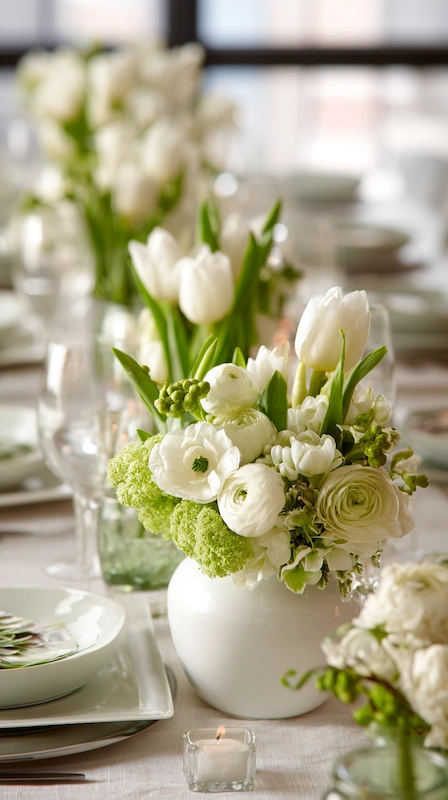
Flower recipe: white tulips, white ranunculus, white anemones, viburnum.
Mixing different white blooms adds dimension without introducing extra colors. Viburnum brings fresh spring green and helps the whites feel soft rather than stark.
4) Pastel Bud Vases (Soft and Romantic)
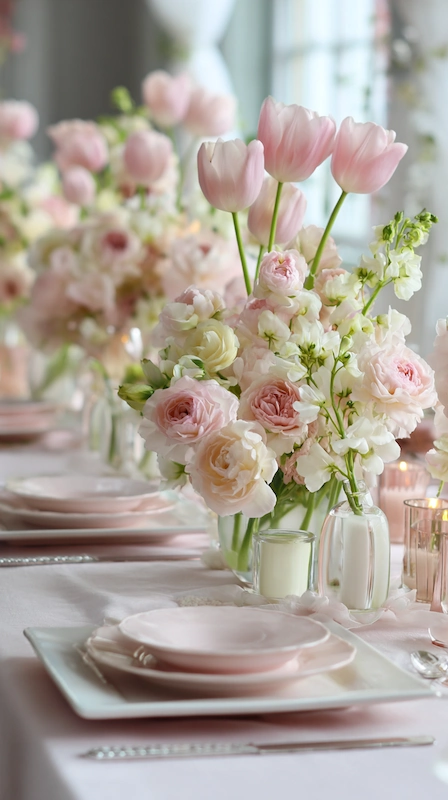
Flower recipe: blush tulips, pale ranunculus, sweet peas, blush spray roses.
Pastels feel instantly spring, and sweet peas add that fluttery, airy texture brides love. Spray roses help fill the gaps so each mini arrangement still looks finished.
5) Sunny Yellow Bud Vases
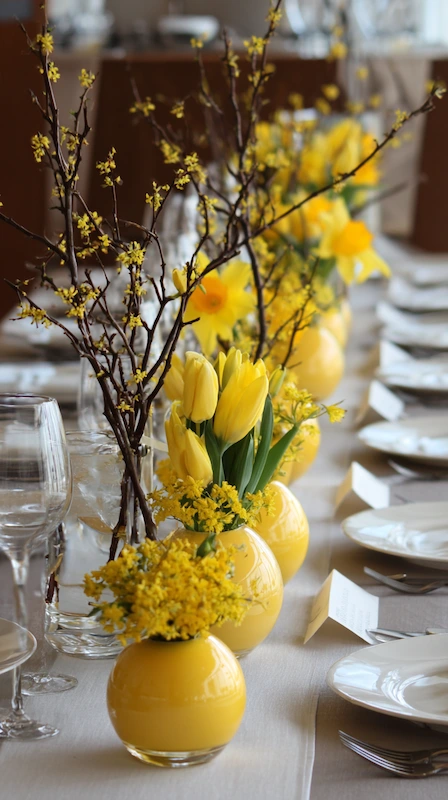
Flower recipe: daffodils, yellow tulips, chamomile or feverfew, forsythia.
This combo is basically sunshine on a table and looks especially bright against white or neutral linens. Forsythia adds height and a branchy shape that makes the design feel naturally wild.
6) Blue and Lavender Bud Vases

Flower recipe: muscari, delphinium, lilac, white ranunculus.
Muscari and delphinium deliver true spring blues that are hard to fake with other blooms. Lilac adds soft volume and a romantic scent that reads “spring garden” immediately.
7) Whimsical Wildflower Minis (Polished)

Flower recipe: anemones, butterfly ranunculus, snapdragons, tweedia.
This mix balances contrast and movement while still feeling refined. Tweedia adds tiny blue accents that look delicate and intentional.
8) Vintage Bottle Cluster
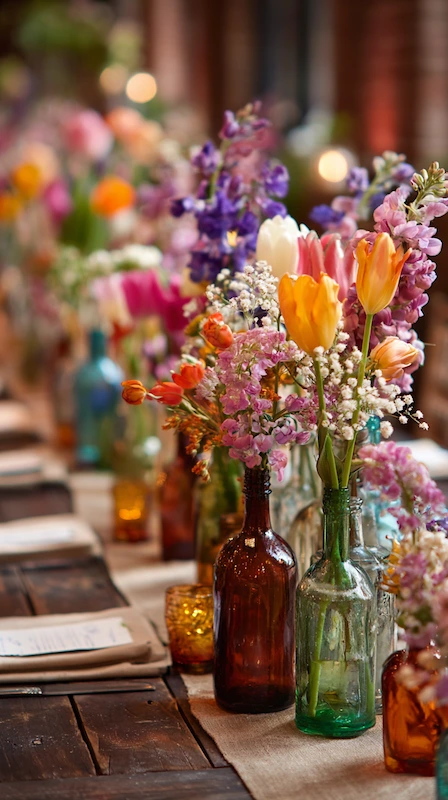
Flower recipe: tulips, spirea, waxflower, sweet peas.
Collected bottles create instant charm, and narrow necks naturally support looser stems. Spirea and waxflower add airy branching texture that keeps everything light.
9) Garden-Grown Textural Bud Vases
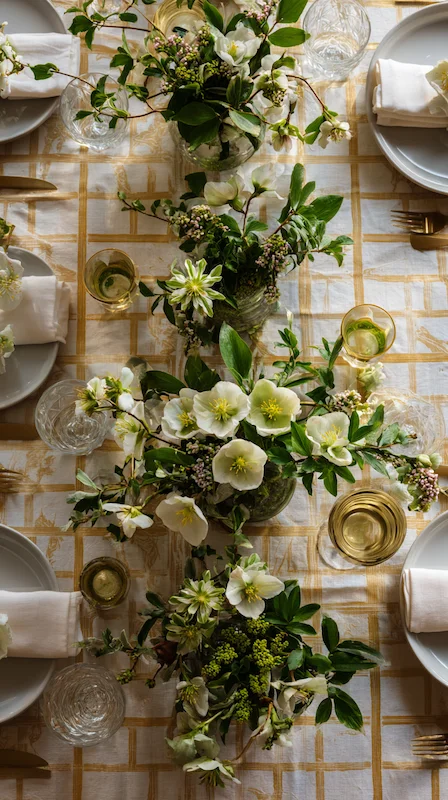
Flower recipe: hellebores, scabiosa, sweet peas, jasmine vine or smilax.
Hellebores bring an elegant, slightly moody tone that still feels seasonal in early spring. Pair them with sweet peas and viney greens so the look stays soft and airy.
Low Centerpieces (Guest-Friendly and Classic)
10) Tulip Bowl Centerpiece

Flower recipe: tulips, hyacinth, ranunculus, pittosporum.
Tulips naturally curve and move, which makes even a compact bowl arrangement feel dynamic. Hyacinth adds a signature spring look, so use a little for scent or a lot for drama.
11) Anemone Contrast Compote
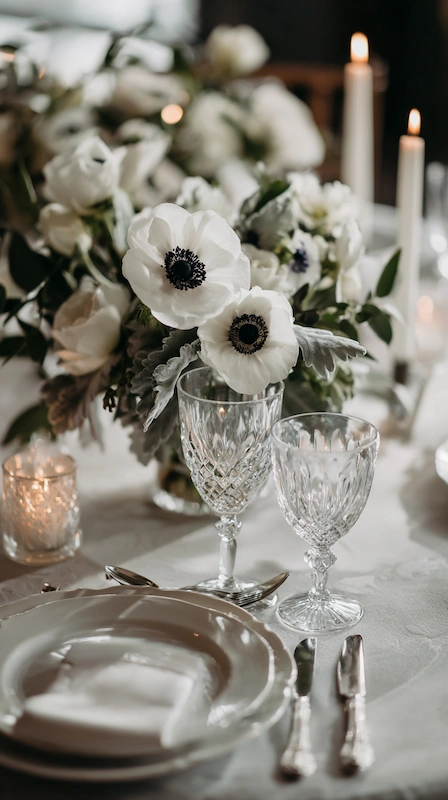
Flower recipe: white anemones, white ranunculus, dusty miller, eucalyptus.
Anemones give you instant graphic contrast, especially if you choose dark centers. Dusty miller softens the palette and adds a velvety texture that feels elevated.
12) Low Lush Blush Romance

Flower recipe: peonies, garden roses, ranunculus, sweet peas.
This is the “bridal bouquet” of centerpieces, full, soft, and romantic from every angle. Sweet peas keep the design from looking too tight by adding delicate movement.
13) Fresh Green and White Classic

Flower recipe: white roses, white tulips, viburnum, touches of hydrangea.
Crisp whites plus spring greens look elegant in any venue, from backyard tents to ballrooms. Use hydrangea as a supporting player so it doesn’t overpower the softer blooms.
14) Market Bouquet Low Arrangement

Flower recipe: daffodils, tulips, ranunculus, stock.
This feels like a fresh bundle from a flower market, especially with stock adding height and fragrance. It’s also an easy way to mix bloom shapes for interest without adding more colors.
15) Neutral Texture (Modern Organic)

Flower recipe: toffee ranunculus, beige roses, lisianthus, olive branch.
Neutrals look expensive when you focus on texture rather than size. Olive branch adds an airy, structured greenery shape that feels modern and refined.
16) Coral and Pink Spring Mix

Flower recipe: coral peonies, ranunculus, spray roses, and poppies when available.
Coral reads warm and joyful for spring without drifting tropical. Poppies add a delicate, playful texture, so ask your florist about availability and handling for your date.
17) Fragrant Spring Low Centerpiece

Flower recipe: lilac, hyacinth, garden roses, eucalyptus.
This creates a true “spring in bloom” moment, especially for daytime or garden weddings. If you’re sensitive to fragrance, use hyacinth sparingly and let lilac carry the scent.
18) Blue and White Garden Classic

Flower recipe: delphinium, tweedia, white ranunculus, white roses.
Blue and white feels crisp, fresh, and slightly coastal while still being timeless. Tweedia adds delicate blue details, while delphinium provides tall, airy lines.
19) Whimsical Spring Botanicals

Flower recipe: fritillaria, tulips, anemones, spirea.
Fritillaria adds a fashion-forward silhouette that instantly makes the centerpiece feel curated. Pair it with familiar spring blooms so the overall look stays bridal and approachable.
20) Pink and Burgundy Romance (Spring Edition)

Flower recipe: ranunculus in pink and burgundy, mauve roses, sweet peas, scabiosa.
This palette gives you moody romance without feeling like fall. Sweet peas and scabiosa keep it light with fluttery texture and movement.
21) Soft Peach “Sunset” Low Centerpiece

Flower recipe: peach tulips, apricot ranunculus, champagne roses, stock.
Peach tones glow in spring light and pair beautifully with neutrals, golds, or warm woods. Stock adds height and fullness so the arrangement looks lush without needing oversized blooms.
22) Small Compote, Big Texture

Flower recipe: buttercream spray roses, ranunculus, waxflower, viburnum, eucalyptus.
A small compote keeps things tidy, but mixing textures makes it feel intentionally designed. This is a great option if you want a soft, romantic look without a tall arrangement.
Long Table Runners and Garland-Style Centerpieces
23) Greenery Runner, Bud Vases on Top

Flower recipe: smilax, seeded eucalyptus, white tulips, waxflower.
A runner gives your table an instantly finished look, even before the flowers go down. Bud vases layered on top add repeated floral moments without blocking conversation.
24) Flower “Meadow” Runner

Flower recipe: ranunculus, anemones, sweet peas, muscari woven into greenery.
Instead of one centerpiece per table, this looks like blooms are naturally growing along the linen. It’s especially striking for long tables and overhead photos.
25) Olive Runner, Optional Citrus Accents

Flower recipe: olive branch, white spray roses, white tulips, and optional lemons.
Olive greenery creates a fresh Mediterranean feel that’s elegant and unfussy. Citrus adds color and texture while still feeling season-appropriate for spring.
26) Eucalyptus and Candle Runner

Flower recipe: silver dollar eucalyptus, white stock, ivory roses.
This setup frames candlelight beautifully while keeping the flowers soft and classic. Stock is ideal here because it adds height without turning into a visual wall across the table.
27) Pastel Garland, Pops of Blue

Flower recipe: ruscus, delphinium, pale tulips, ranunculus.
The pastels feel springy, while the blue accents keep the palette looking fresh and modern. Use delphinium as a light accent so the garland stays airy.
28) Wooden Box “Garden Bed” Centerpiece

Flower recipe: tulips, daffodils, hyacinth, moss, seeded eucalyptus.
A long wooden box creates structure and makes the flowers feel planted rather than arranged. Moss is the small detail that instantly reads “spring garden.”
29) Minimal Runner, Flower Clusters

Flower recipe: Italian ruscus, viburnum, ranunculus clusters every 12 to 18 inches.
This is a great compromise if you love the runner look but want to control costs. Strategic clusters create focal points while leaving negative space for a clean, editorial feel.
30) Garland with Tall Bud Vases

Flower recipe: smilax, tulips, sweet peas, delphinium accents.
Mixing garland with a few taller bud vases adds height without committing to full tall arrangements. This style keeps the tablescape airy and visually varied from seat to seat.
31) Greenery and White “Runner Lite”

Flower recipe: seeded eucalyptus, white stock, white roses, waxflower.
If you love a runner but want something cleaner, ask for spaced clusters rather than full coverage. The all-white flowers keep it classic, while waxflower adds that delicate spring texture.
Tall Centerpieces (Big Statement, Still Spring)
32) Flowering Branch Statement (Cherry Blossom or Quince)

Flower recipe: cherry blossom or quince branches, tulips, ranunculus at the base.
Flowering branches are peak spring and create height without looking heavy. A lush base of tulips and ranunculus makes the design feel grounded and intentional.
33) Airy Tall Arrangement (Light and Floaty)

Flower recipe: delphinium, snapdragons, tulips, sweet peas.
These blooms build height with space and movement, so the centerpiece feels tall but not bulky. Sweet peas soften the overall shape and add a romantic finish.
34) Classic Tall White and Green

Flower recipe: hydrangea, white roses, stock, ruscus.
This reads elegant from across the room and suits formal venues beautifully. Ask your florist about mechanics and hydration so it stays fresh through the full reception.
35) Spring Wedding Centerpieces, Modern Asymmetrical Tall

Flower recipe: calla lilies, tulips, orchids as an optional accent, eucalyptus.
Calla lilies instantly make the design feel sleek and contemporary, especially in a sculptural vase. A touch of orchids adds a high-end detail without overwhelming the spring vibe.
Choose two to three favorites and share them with your florist, then let them adjust varieties based on what’s freshest that week. With the right flower pairings and a clear direction, your wedding table flowers can feel seasonal, personal, and beautifully you.