Oval Engagement Ring Obsession: Why This Cut Is Everyone’s Main Character Right Now
The oval engagement ring is having the kind of moment most of us can only dream about. A decade ago it was the quiet kid in the jewelry case. Today it is the shape every newly engaged group chat is zooming in on, and honestly, the glow-up math checks out.
I have watched a lot of ring reveals in my planning career. Like, a lot a lot. And here’s what I’ve learned: when the box opens and there’s an oval inside, the reaction is louder. Every single time.
So let’s break down why the oval cut took over, what the actual data says, how to shop for an oval diamond without getting burned, and which settings make this stone shine hardest. Grab your beverage of choice. This is the fun kind of homework.
The Numbers Behind the Takeover (Yes, There Are Receipts)
This is not a vibes-only claim. According to The Knot Jewelry and Engagement Study, oval diamonds now make up 25 percent of all engagement rings in the US, sitting just behind round diamonds at 28 percent. Back in 2015, ovals appeared in only 2 percent of new engagement rings.
From 2 percent to 25 percent in about a decade. That is not a trend, that is a takeover with excellent lighting. Meanwhile, the classic round has slipped 21 percent since 2015. The crown may not be changing hands yet, but for the first time in decades it suddenly has competition.
The celebrity receipts are just as strong. Blake Lively kicked things off with her oval back in 2012, and Hailey Bieber, Ariana Grande, and Kourtney Kardashian have kept the momentum rolling ever since. When that many A-list left hands agree on something, the rest of us tend to follow.
Trend Alert: The same study found yellow gold has surged from 9 percent of engagement rings in 2017 to 36 percent today, tying white gold for the top metal. A warm gold band under an elongated oval is the defining look of this engagement era, and it photographs like a dream.
Why Everyone Is Obsessed With the Oval Cut
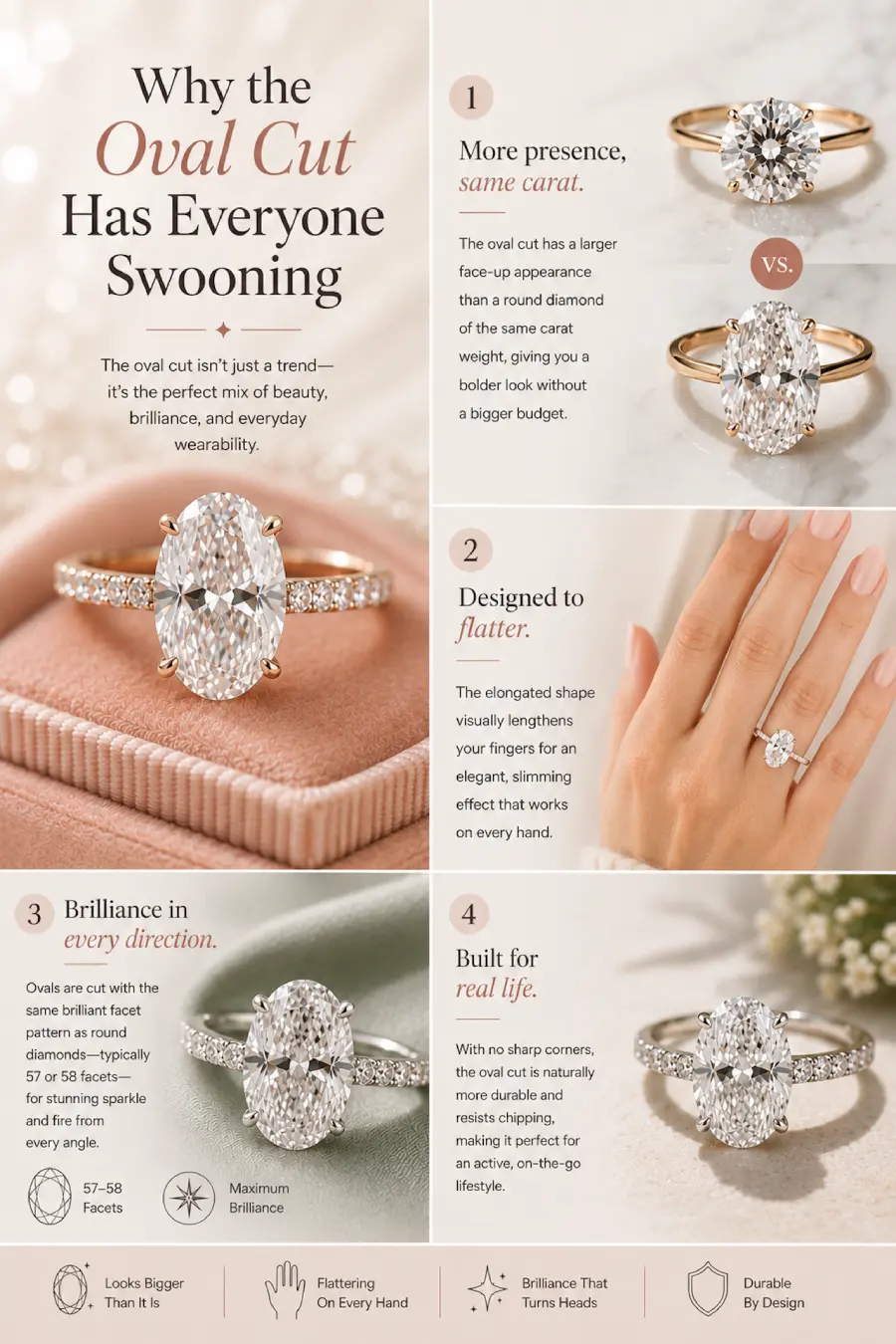
The oval did not get popular by accident. This diamond has a resume:
- It looks bigger than it is. The elongated oval shape spreads more surface area face-up than a round diamond of the same carat weight, so your stone reads larger without your budget reading larger. Big work-smarter energy.
- It flatters basically every hand. That lengthwise stretch visually elongates fingers. It is the jewelry equivalent of good tailoring.
- It keeps up with the classics. It is cut in the same brilliant faceting style as a round, usually with 57 or 58 facets, so it delivers serious brilliance and fire in every direction.
- It is built for real life. No sharp corners means fewer chances to chip. Those smooth, rounded edges make an oval diamond a durable choice for people who use their hands for things other than admiring their ring.
Key Takeaway: The oval gives you the sparkle of a round, the finger-lengthening effect of a marquise, and none of the chip-prone corners of a princess. It is the group project member who quietly does everything.
And because “looks bigger” deserves receipts too, here is how the two shapes measure up at the same carat weight. These are approximate face-up measurements for well-cut stones, so treat them as the center of the target:
| Carat | Round diameter | Oval dimensions |
|---|---|---|
| 1.0 ct | 6.5 mm | 7.7 x 5.7 mm |
| 1.5 ct | 7.4 mm | 9.0 x 6.5 mm |
| 2.0 ct | 8.1 mm | 10 x 7 mm |
Same weight on the certificate, noticeably more presence on the hand. That extra millimeter or two of length is the whole magic trick.
Oval vs. Round Diamond: The Friendly Family Feud
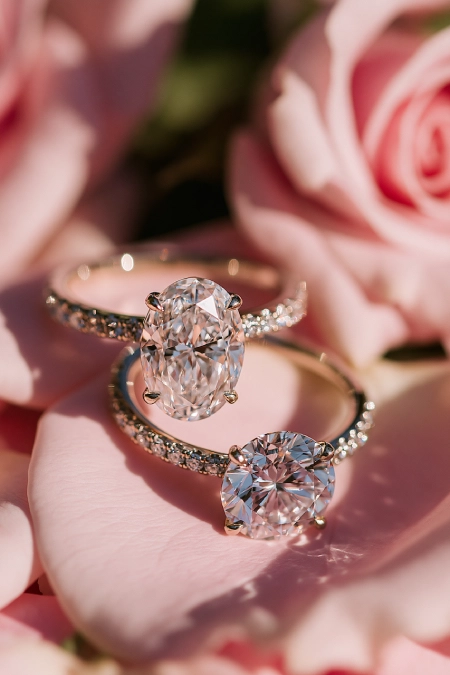
The round cut has been the default diamond engagement ring choice for a century, and it still holds the top spot. So why are so many couples suddenly looking past it?
| Factor | Oval | Round |
|---|---|---|
| Face-up size | Appears larger per carat | True to its carat weight |
| Finger effect | Elongates and slims | Neutral |
| Sparkle style | Brilliant faceting, soft glow at the ends | Maximum light return |
| Price per carat | Often gentler | Tends to run highest of all shapes |
| Overall vibe | Modern classic | Timeless classic |
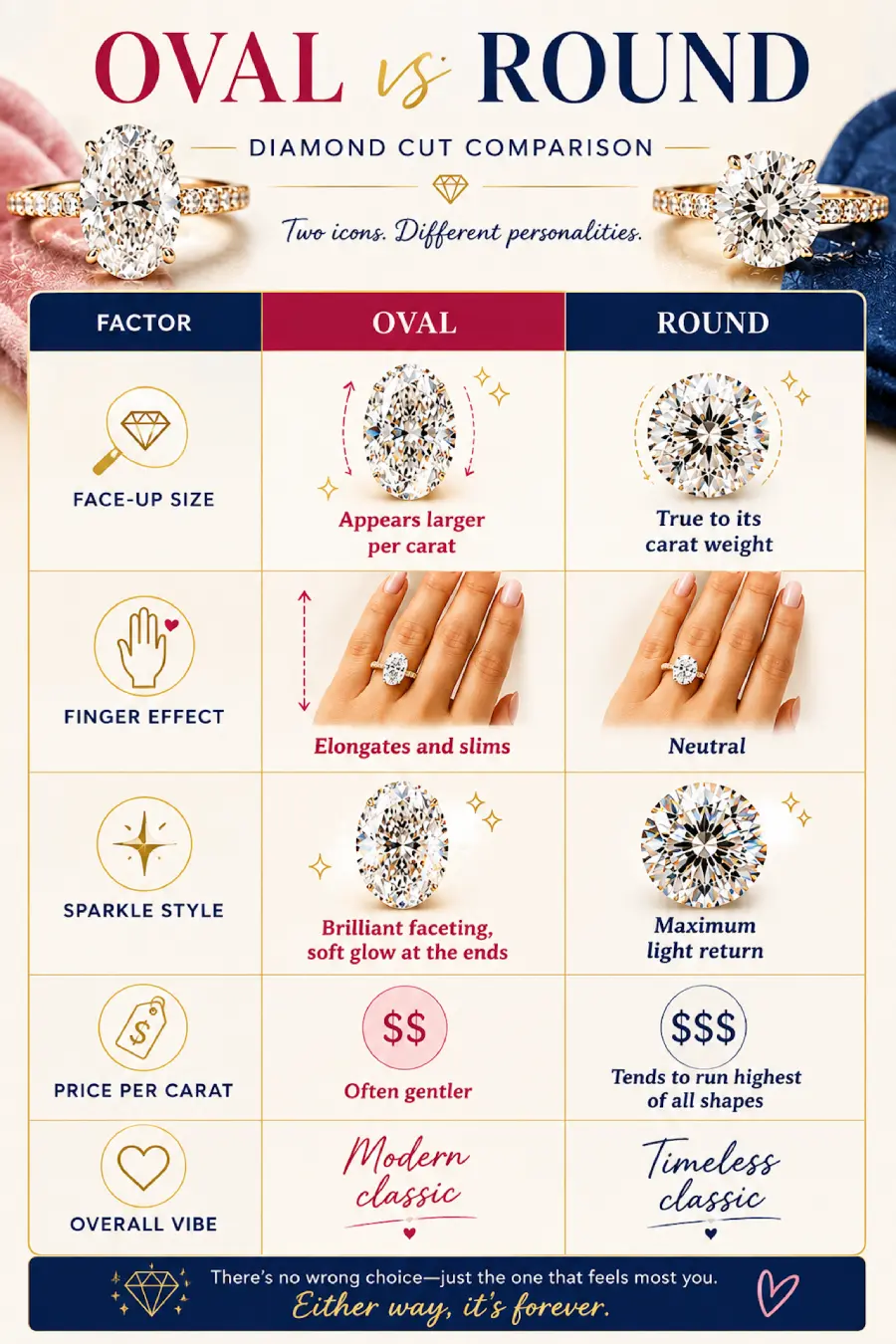
Both are brilliant cuts, so light performance is elite either way. The practical difference: ovals often deliver more visual spread per carat, and because demand for rounds is so high, an oval of similar quality tends to come with a friendlier price tag. Your budget notices. Your hand does not complain.
Want the full tour of every shape on the menu, from emerald to pear to marquise? Our guide to the most popular diamond cuts for engagement rings breaks down all 12 heavy hitters.
The Bow Tie Effect: The One Check You Cannot Skip
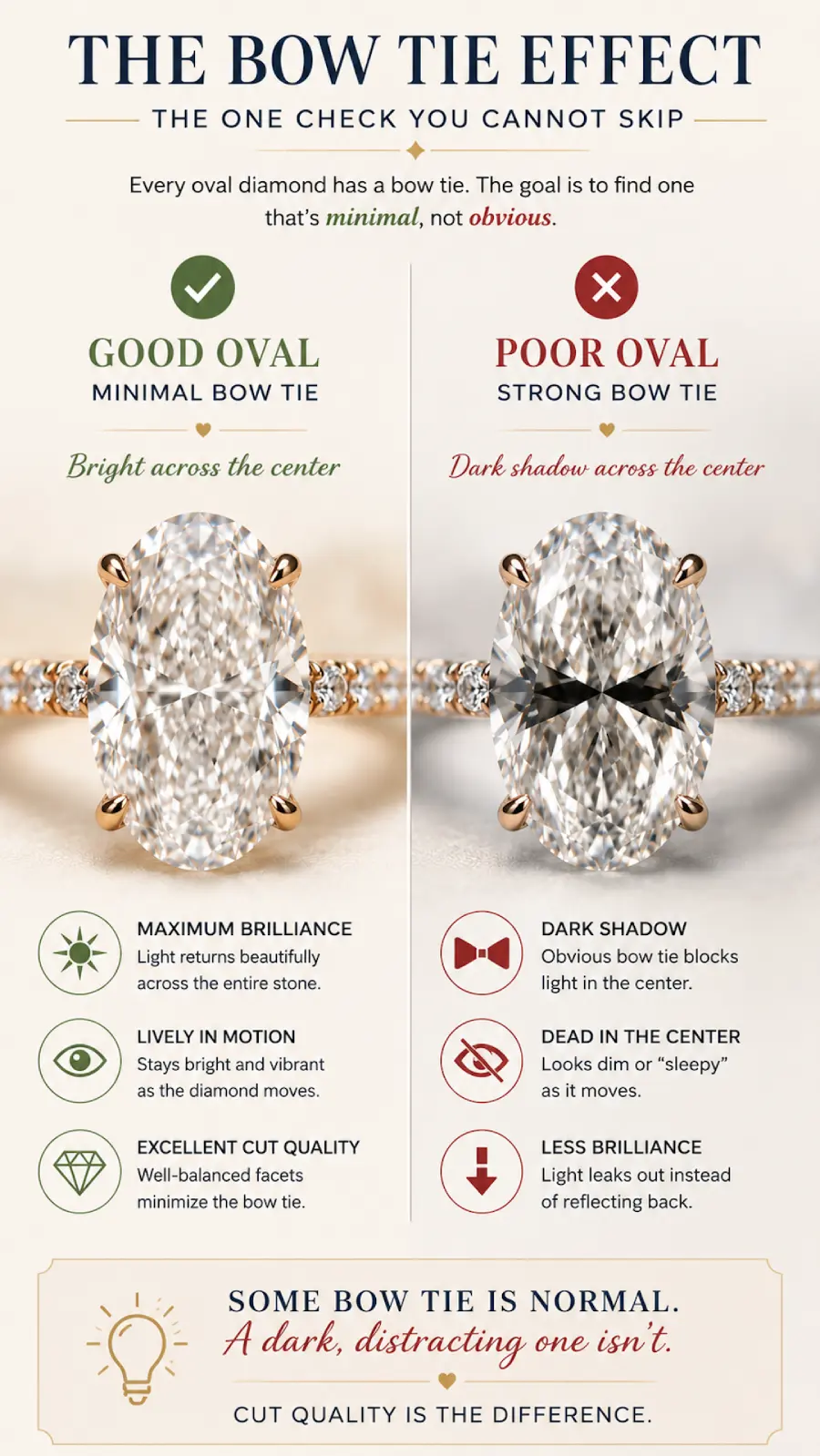
Time for the planner voice. Every oval-cut stone has one optical quirk: a darker shadow that can stretch across the middle of the diamond, shaped suspiciously like the neckwear your future father-in-law will be wearing at the reception. It happens because your own head and shoulders block some light as you look down at the stone.
According to GIA’s oval cut diamond guide, some degree of this effect is always present in the shape. That part is normal. A harsh, obvious shadow is not, and the difference comes down to cut quality.
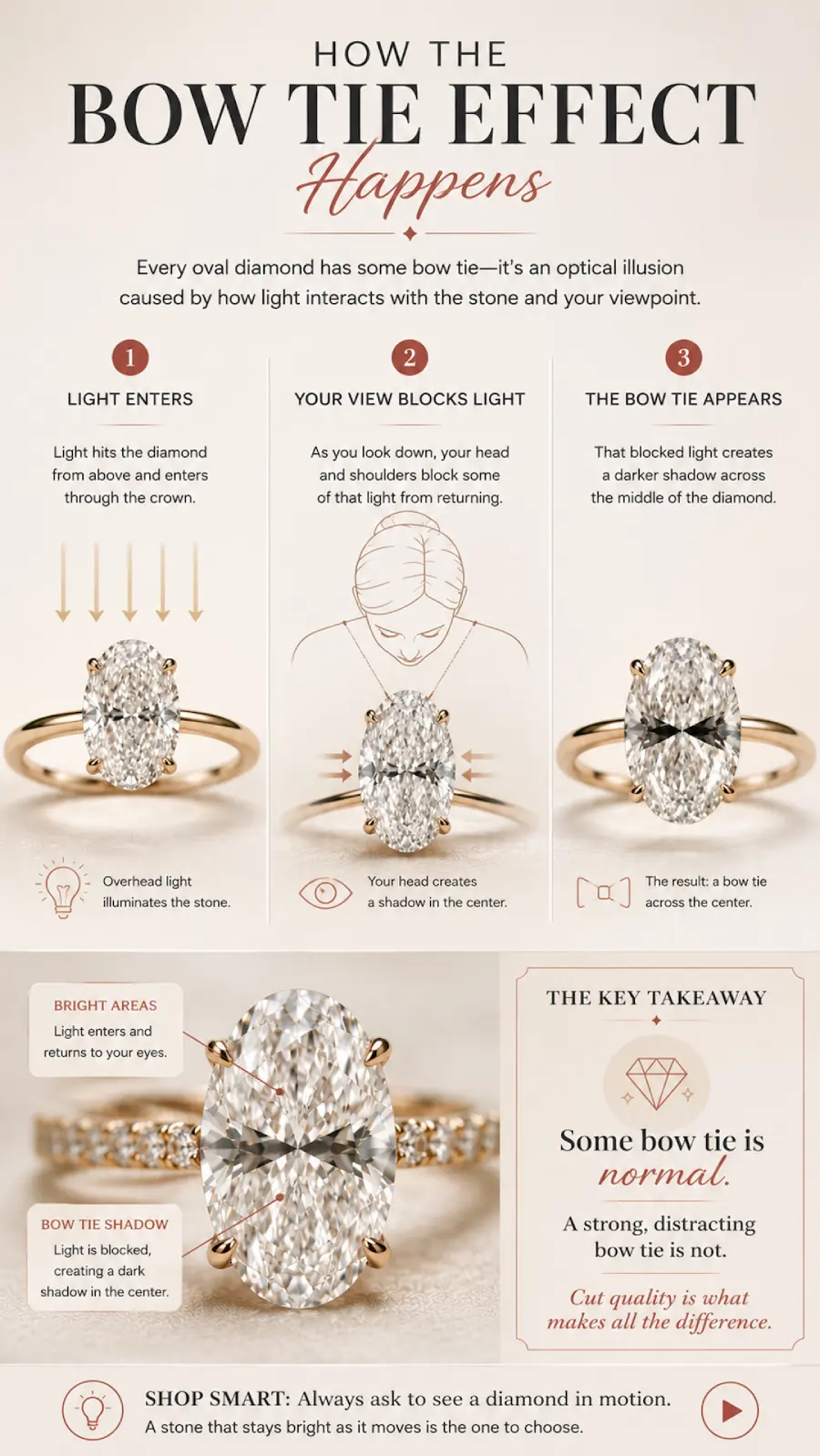
How-To: Here is how to shop around it:
- Ask for a video, not just photos. The shadow reveals itself in motion. A stone that stays lively as it moves is a keeper.
- Stick to a length-to-width ratio between 1.30 and 1.50. GIA flags this range as the sweet spot: gently elongated, classic, and less prone to heavy shadowing than super-stretched stones.
- Check the symmetry. Imagine folding the diamond in half both ways. The halves should mirror each other, with smooth shoulders that neither bulge nor go flat.
- Prioritize color at the tips. Ovals show warmth at their pointed ends first. GIA suggests the G to H color range as the value sweet spot for a bright, white face-up look.
Expert Insight: For clarity, VS2 or SI1 grades usually hit the value bullseye. The oval’s brilliant faceting is excellent at hiding tiny inclusions, so you can put that budget toward size or metal instead. Your jeweler can pull stones in both grades and let your eyes vote.
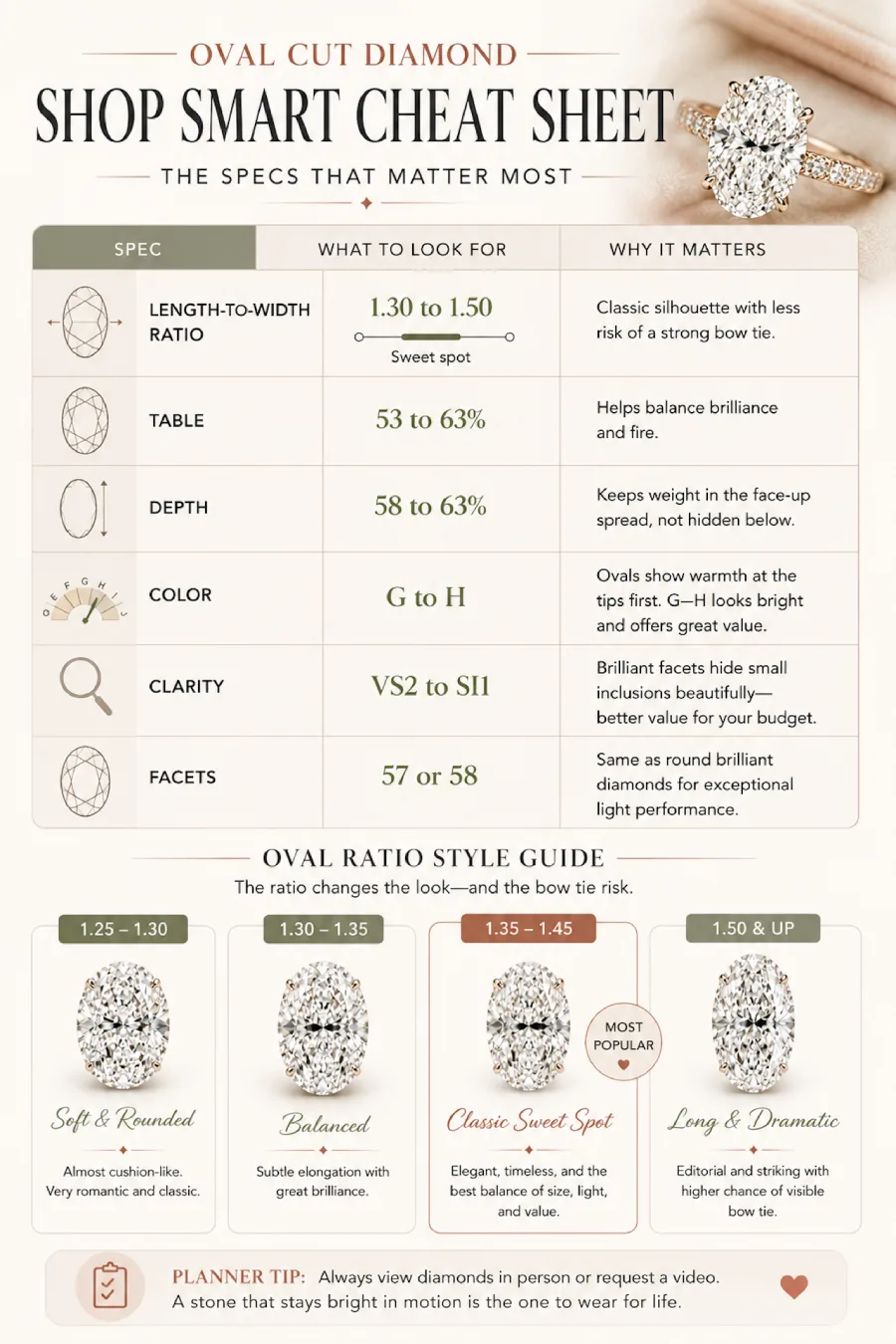
Your screenshot-this cheat sheet:
| Spec | What to look for | Why it matters |
|---|---|---|
| Length-to-width ratio | 1.30 to 1.50 | Classic silhouette, softer shadow |
| Table | 53 to 63 percent | Widely cited target for balanced light return |
| Depth | 58 to 63 percent | Keeps weight in the face-up spread, not hidden below |
| Color | G to H | Ovals show tint at the tips first |
| Clarity | VS2 to SI1 | Brilliant facets hide small inclusions |
| Facets | 57 or 58 | Round-style light performance |
And if you are fine-tuning the silhouette, here is the quick ratio style guide:
- 1.25 to 1.30: soft and rounded, almost cushion-adjacent
- 1.35 to 1.45: the classic sweet spot most couples choose
- 1.50 and up: long, dramatic, editorial, with a higher chance of visible shadowing
Actionable Tip: Stick to GIA or AGS certified diamonds whenever possible. Independent certification verifies the 4Cs so you are not paying premium prices for a seller’s optimistic grading. If the stone is lab-grown, look for a GIA or IGI report. No certificate, no deal.
The Best Settings for an Oval Engagement Ring
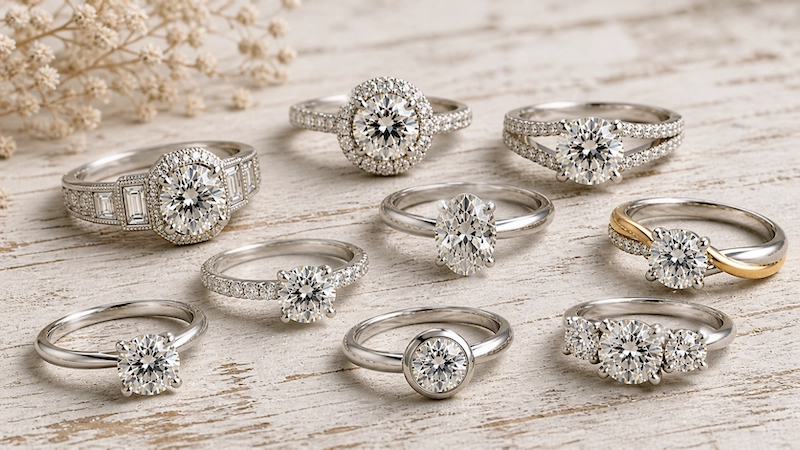
An oval cut engagement ring plays well with nearly every ring design, which is a big part of its charm. A few star pairings:
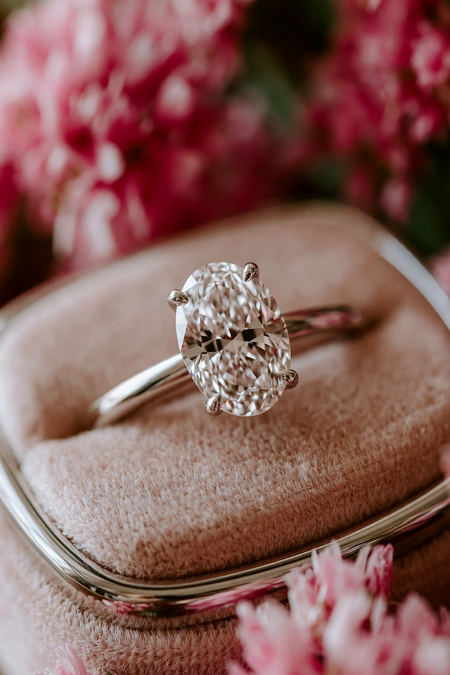
- Classic solitaire. One stone, one band, zero distractions. A solitaire keeps your oval front and center with zero competition, and it pairs effortlessly with any wedding band later.
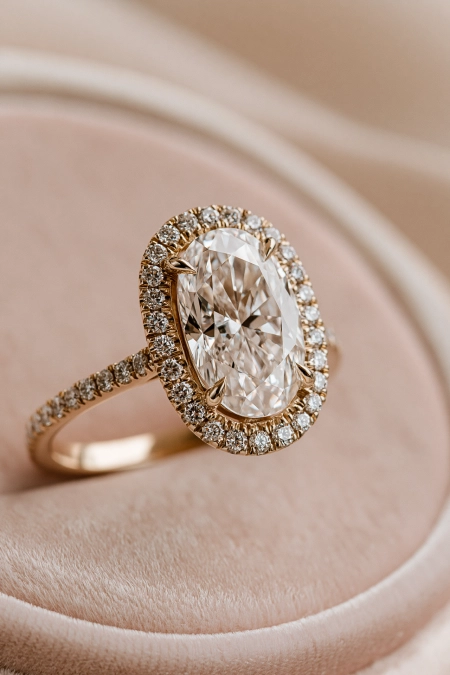
- Halo and hidden halo. A halo of tiny diamonds makes the center stone look even bigger, while a hidden halo tucks that circle of light underneath for a secret-handshake detail. Per The Knot’s data, the hidden halo now appears on 18 percent of engagement rings, a meteoric rise for a detail most guests will never even spot.
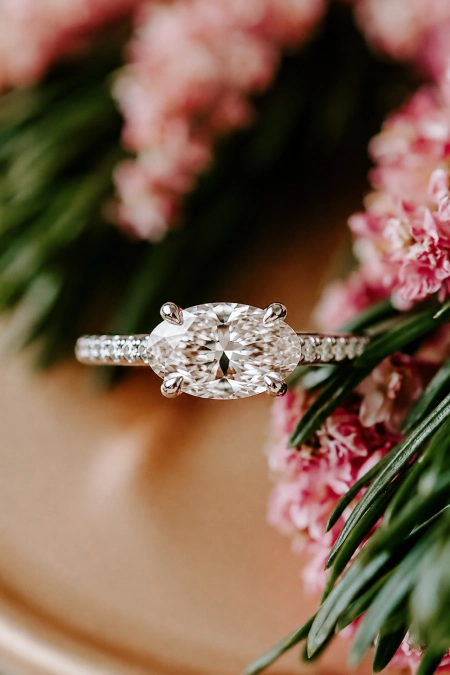
- East-west. Turn the oval sideways and suddenly the whole ring feels editorial. This orientation is one of the fastest-growing looks in diamond engagement rings right now.
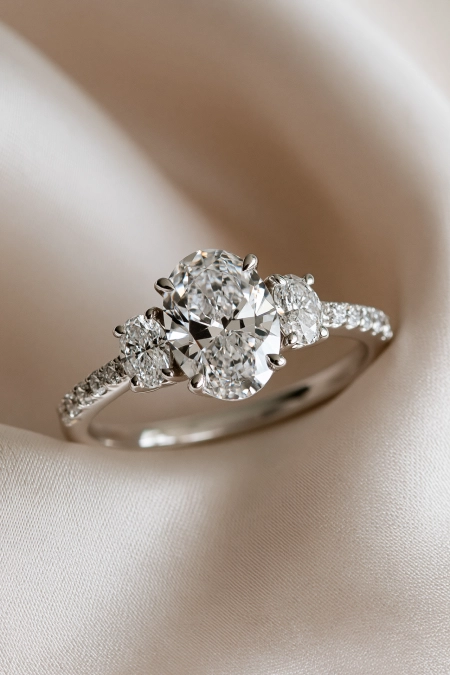
- Three-stone. An oval flanked by two smaller stones reads romantic and substantial. Past, present, future, plus more real estate on your hand.
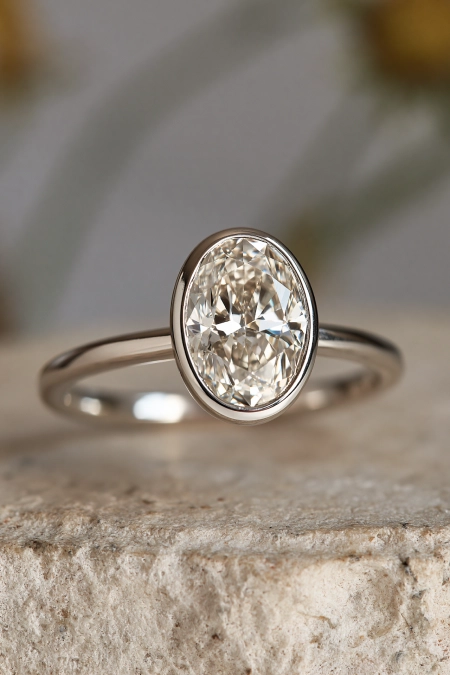
- Bezel. A slim metal rim wraps the diamond completely. Sleek, snag-proof, and beloved by nurses, climbers, and anyone whose hands actually do things.
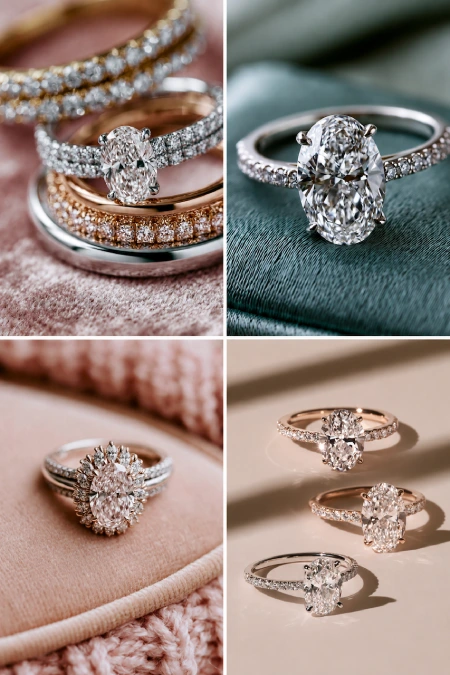
On metals: yellow gold is the moment, white gold is the classic, and platinum is the tank. If you go gold, 14 karat is the durable everyday pick, while 18 karat gives a richer color with a slightly softer feel. There is no wrong answer here, only different flavors of pretty.
Want to compare whole looks side by side before you commit? Our guide to popular engagement ring styles that will still turn heads in 20 years covers every setting above in delicious detail.
Smart Moves Before and After You Buy
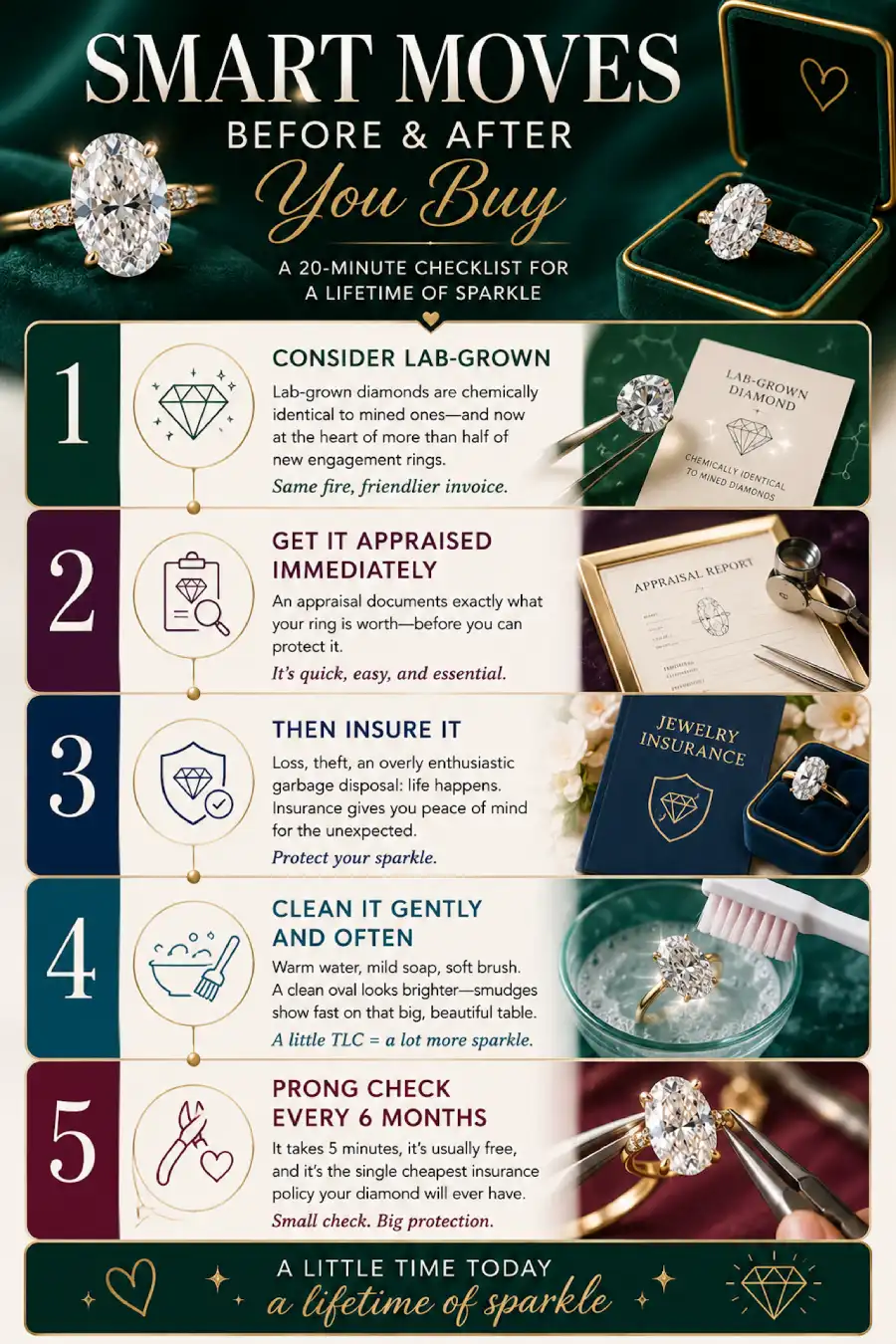
Now for the responsible-adult portion of the evening. You’re better off spending twenty minutes on this list than one very bad afternoon explaining to your partner what happened to the ring.
- Consider lab-grown. Lab-grown diamonds are chemically identical to mined ones, and The Knot’s study shows they now sit at the heart of more than half of new engagement rings. Same fire, friendlier invoice.
- Get it appraised immediately. An appraisal documents exactly what your diamond ring is worth, and you need it before you can protect it. Our walkthrough on how to get your engagement ring appraised makes it painless.
- Then insure it. Loss, theft, an overly enthusiastic garbage disposal: life happens. Here is how to insure your engagement ring the smart way.
- Clean it gently and often. Warm water, mild soap, soft brush. That big open table shows smudges fast, and a freshly bathed oval ring can look a full grade brighter.
Pro Tip: Book a quick prong check with your jeweler every six months. It takes five minutes, it is usually free, and it is the single cheapest insurance policy your diamond will ever have.
A Tiny Bit of Oval History (For Your Trivia Arsenal)
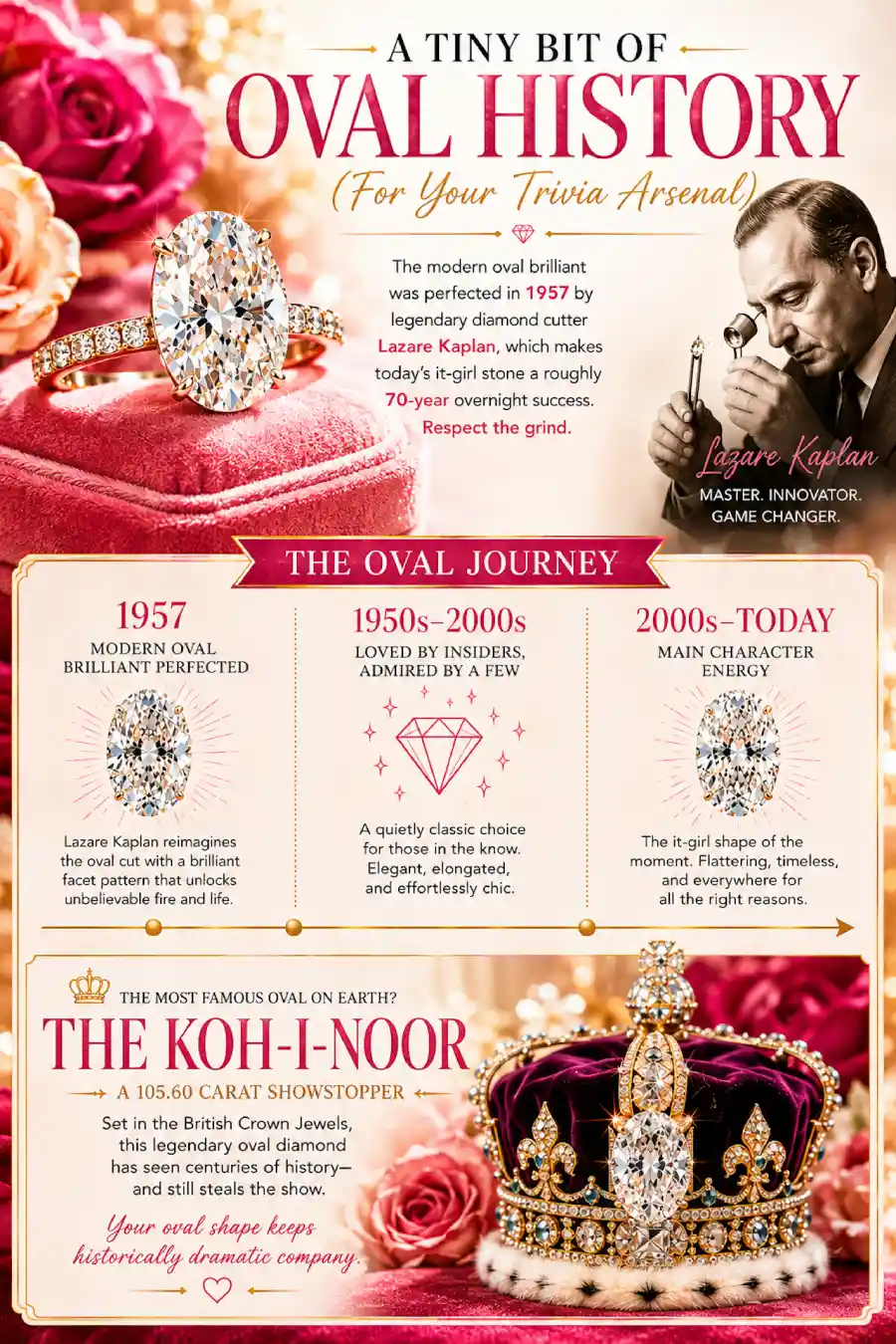
The modern oval brilliant was perfected in 1957 by legendary diamond cutter Lazare Kaplan, which makes today’s it-girl stone a roughly 70-year overnight success. Respect the grind.
And the most famous oval on Earth? The Koh-i-Noor, a 105.60 carat showstopper set in the British Crown Jewels. Your oval shape keeps historically dramatic company.
Oval Engagement Ring FAQ
Is an oval more expensive than a round?
Usually the opposite. Because rounds are in the highest demand, an oval diamond engagement ring of comparable quality often costs less per carat while looking larger face-up. Exact numbers depend on the 4Cs and the market, so compare certified stones side by side before deciding.
Do ovals sparkle as much as rounds?
They come impressively close. Ovals use the same brilliant faceting pattern as rounds, so light return is excellent. A well-cut round still holds the technical crown, but on an actual hand, most people cannot tell the difference.
What length-to-width ratio is best for an oval diamond?
Most couples land between 1.30 and 1.50. Lower reads soft and rounded; higher reads long and dramatic. GIA calls this window the classic range, and it is the safest starting point if you are shopping online.
Does every oval have that dark shadow across the middle?
To some degree, yes. It is baked into the physics of the shape. In a well-cut stone the effect is subtle and can even add depth and character. Watch a video of the exact stone before buying and you will know immediately whether it bothers you.
Is the oval just a passing trend?
A full decade of steady growth says otherwise. Shapes that climb slowly and then hold their ground, the way the oval has, tend to become permanent classics rather than fads. The marquise had a moment. The oval built a career.
The Bottom Line
The bottom line is this: the oval diamond ring earned its crown the honest way. It looks bigger, wears smarter, photographs beautifully, and shops sensibly. If your heart says oval, the data has your back, and so do I.
Just engaged and wondering what happens after the ring reveal settles down? Start with our checklist of what to do first after getting engaged, appraisal and insurance included.
Now go zoom in on some contenders. Main character energy only. And yes, that phrase has now bookended this whole article. Some things, like the oval, are worth coming back to.