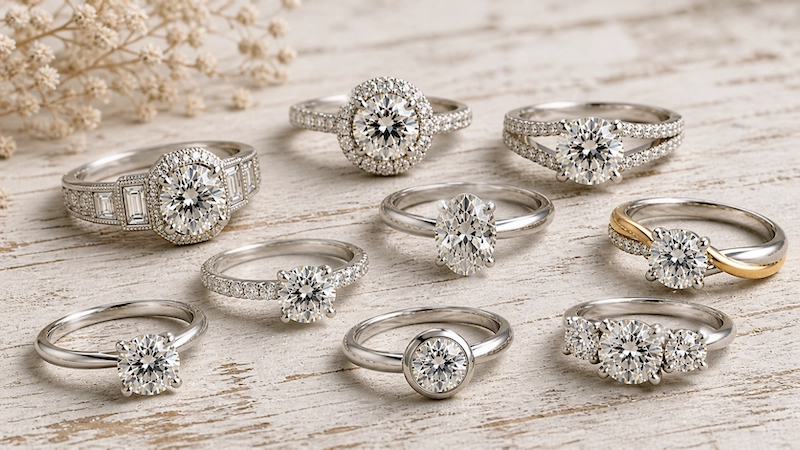
Marquise Engagement Rings: The Vintage Cut With Main-Stage Energy
A marquise engagement ring is the shape for the bride who wants her ring to make a statement before anyone even asks about the carat weight. Long and slim, with a point at each end, it is one of the most dramatic silhouettes you can choose.
That drama comes with a few practical questions. How long should the stone be? How do you protect those points? And will a wedding band actually sit next to it?
This guide walks you through each step: the ratio, the cut details worth checking, the settings that protect the tips, and the move that saves the most headaches later, which is choosing your engagement ring and wedding band together.
In This Guide
The Marquise Cut at a Glance
Here is the quick cheat sheet:
| Feature | What to know |
|---|---|
| Shape | Elongated with a point at each end, sometimes called a “navette” (little ship) |
| Faceting | Brilliant style, typically around 56 facets |
| Common ratio | About 1.6:1 to 2.2:1, with roughly 2:1 the most common (GIA) |
| Face-up size | Tends to look larger than a round of the same carat weight |
| On the hand | The long outline can make fingers appear longer |
| Watch out for | Vulnerable points and the bow-tie effect |
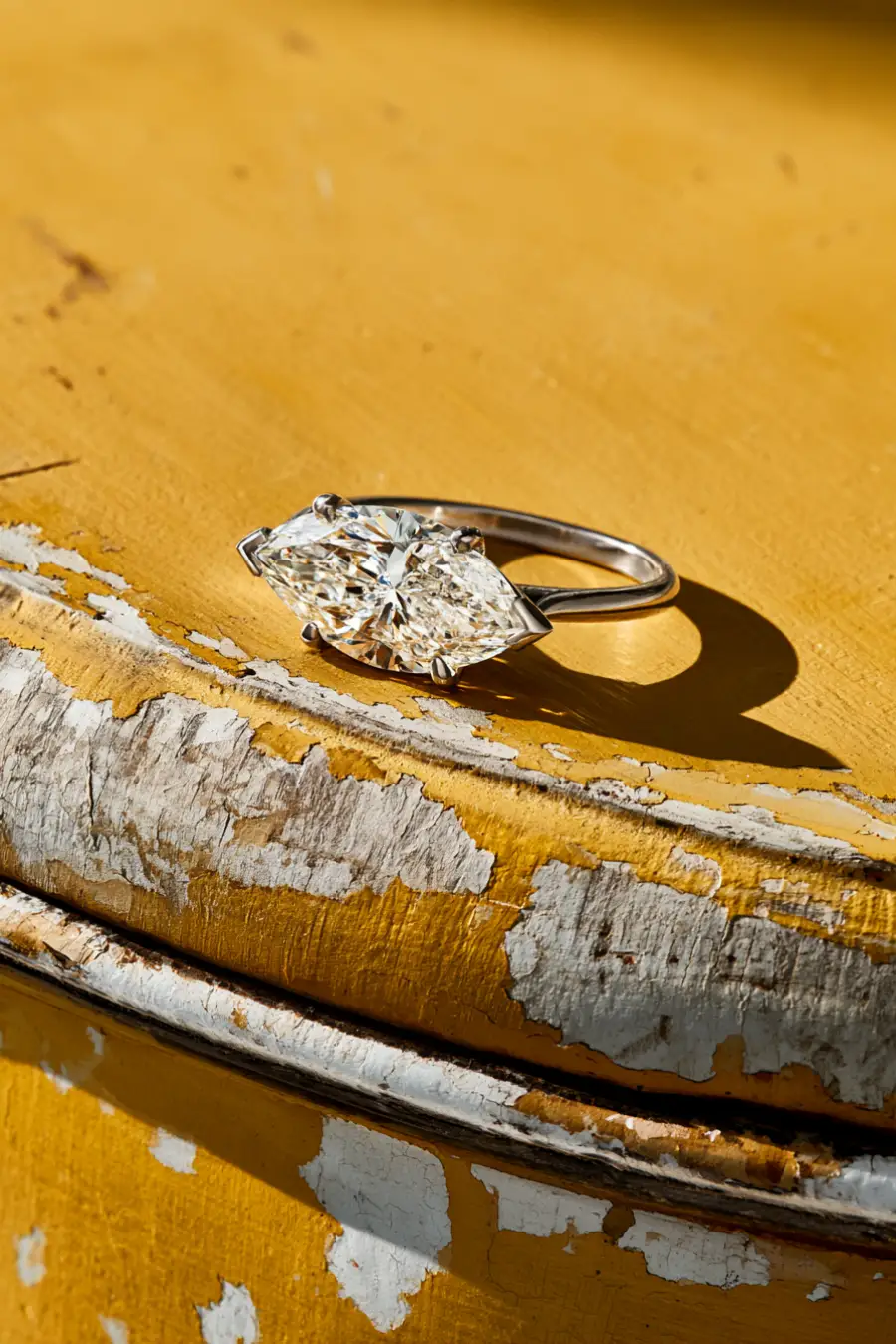
For a sense of scale, Blue Nile gives an approximate example: a 1 carat marquise can measure roughly 10 mm by 5 mm, while a round of the same weight is typically around 6.4 mm across. Exact measurements vary from stone to stone, but that extra length is why a marquise cut diamond can create the illusion of a bigger stone.
Why Couples Choose a Marquise
Size
Length per carat
The weight is spread along a long outline, so a marquise diamond ring often reads larger face-up than a round of the same weight.
On the hand
A lengthening effect
Its elongated outline can make fingers appear longer and slimmer.
Style
Vintage character
The shape dates to 18th-century France, so it has an heirloom feel, especially on a yellow gold band.
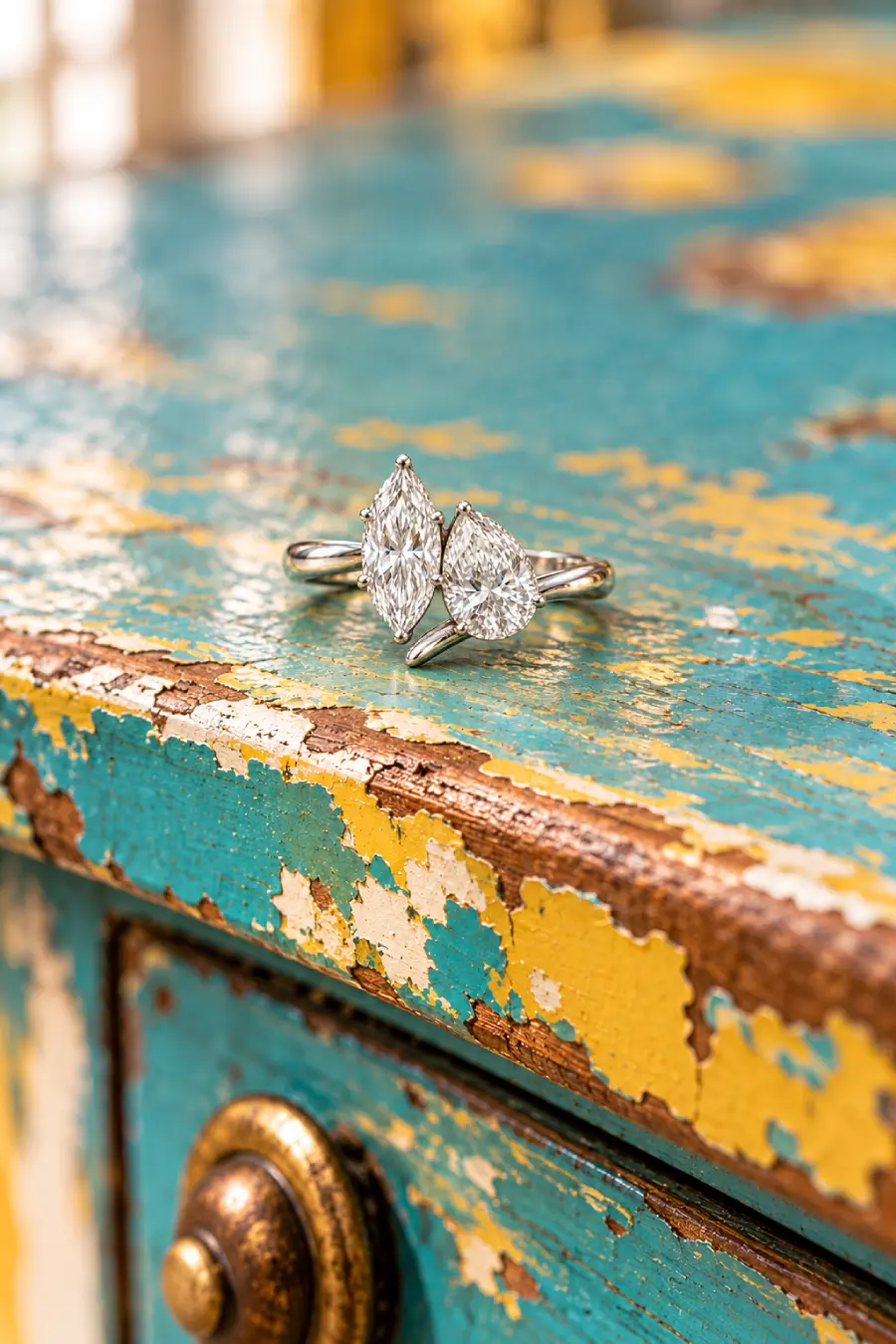
Room to personalize: setting it sideways, pairing it in a toi et moi, or choosing a shaped band can give a familiar silhouette a more personal look.
A quick bit of history: GIA says the cut was developed in France in the 1740s, is said to be named for the Marquise de Pompadour, a mistress of King Louis XV, and was a favorite in the Edwardian era. If you love antique and vintage engagement rings, that history is part of the appeal.
How to Choose a Marquise Diamond
The marquise is one of the trickier shapes to shop, so take these checks in order.
Find your length-to-width ratio
The length-to-width ratio controls the whole personality of the stone. GIA reports that marquise diamonds most commonly range from about 1.6:1 to 2.2:1, with roughly 2:1 the most common.
- Lower ratios (around 1.6 to 1.8): Fuller and softer, a little closer to an oval.
- Middle ratios (around 1.85 to 2.0): The classic marquise look.
- Higher ratios (2.1 and up): Long, slim, and very dramatic.
Pro Tip: Longer stones look bigger face-up, but they also cover more of your finger. Try a few ratios on your hand before you narrow the search, because a number on a report rarely tells you how it will look on you.
Check the symmetry
Picture a line running down the length of the stone: both halves should mirror each other, and the two points should line up.
A lopsided marquise is easy to notice once the ring is on your hand. Look at the stone itself in photos and video, not just the grades on the report.
Judge the bow-tie effect in person
Many marquise diamonds show a darker area across the center, shaped like a bow tie. Some contrast is normal: GIA explains that a diamond’s facets act like mirrors, and your own head blocks some light as you look down at the stone. The intensity varies with the stone’s proportions, from light gray to nearly black.
You’re better off judging it the way you will see it every day. GIA recommends viewing the diamond face-up, without magnification, in normal lighting at a normal distance, as if it is on your hand. Do that in person if you can, and watch a video of the exact stone as well. A soft, subtle bow tie is fine. One that grabs your eye first is a reason to keep looking.
Ask how the tips are cut
The points are the most delicate part of a marquise, and some cutters address that in the faceting itself. GIA describes “French tips” as a variation where the cutter modifies the star and upper girdle facets at each end, rather than using one large bezel facet there, to increase durability.
The stone still has a pointed outline. French tips change the facet arrangement at the ends; they do not replace the point. Ask your jeweler whether the stone you are considering has them, then choose a setting that protects the tips either way.
Compare color and clarity stone by stone
Because the marquise uses brilliant-style faceting, it can mask small inclusions better than step cuts like the emerald. That gives you some flexibility, but the right grades depend on the individual diamond.
- Compare a few color grades side by side. In a long shape, color can be more noticeable toward the ends, so look at the points, not just the center.
- Match color to your metal. Yellow gold can make a little warmth look intentional, while white gold and platinum show it more.
- Confirm the stone is eye-clean. Lower clarity grades vary widely. Ask where the inclusions sit, because an inclusion near a point is in an already vulnerable area.
Ask for the grading report
Whether you choose a lab-grown or mined diamond, buy your marquise cut engagement ring with an independent grading report. It confirms the carat weight, color, clarity, measurements, and proportions, so you can compare stones fairly.
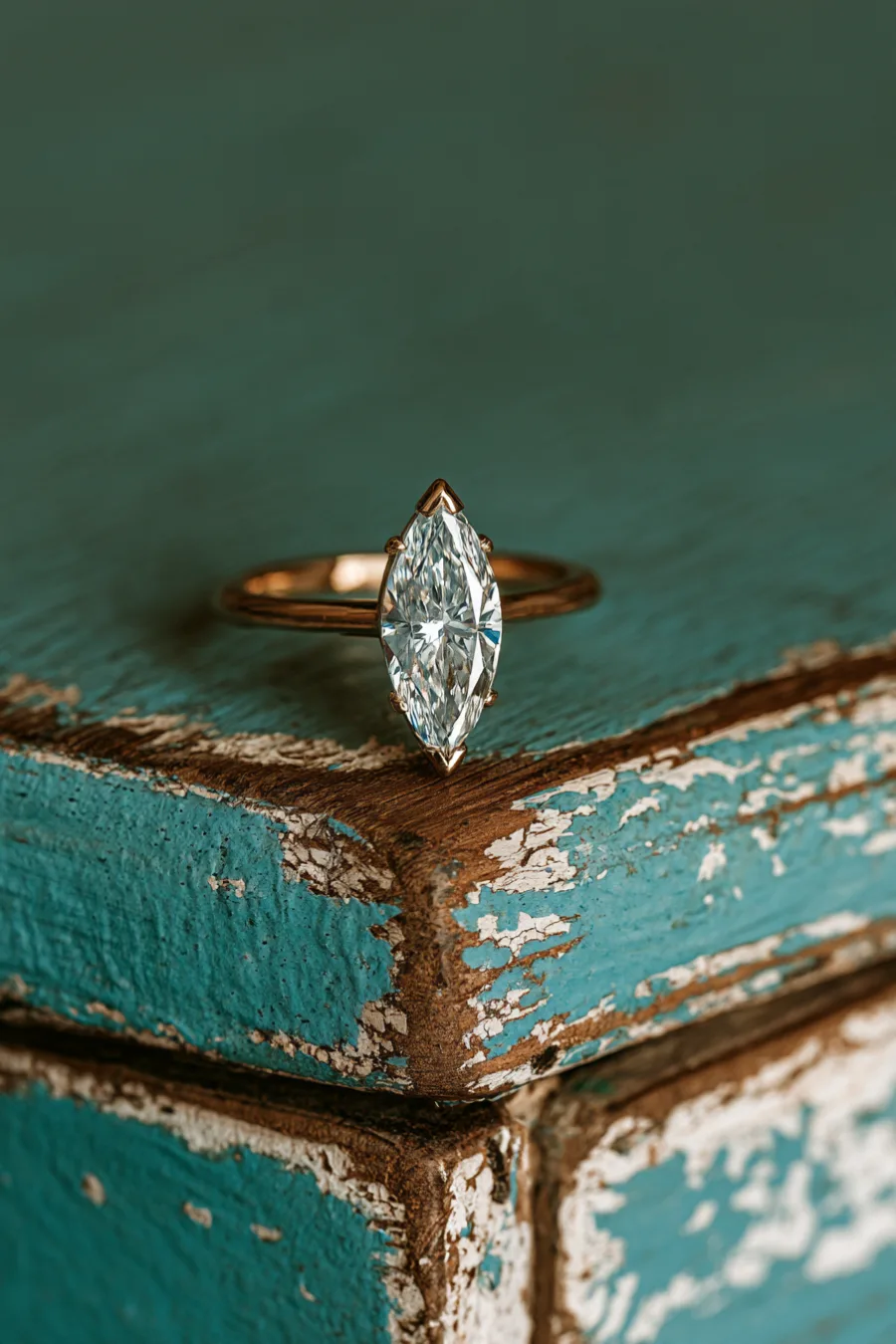
Expert Insight: In The Knot’s 2026 Real Weddings Study of couples married in 2025, 61 percent of engagement rings featured a lab-grown center stone. If you are weighing the two, our guide to lab-grown diamond engagement rings breaks down the trade-offs.
Protecting the Points
But here’s the catch: those two points are the most fragile part of the stone. A hard knock against a countertop or a car door can chip an unprotected tip.
That’s why the setting matters as much as the diamond. Two common ways to protect it:
- V-prongs (also called chevron prongs): Metal prongs that wrap over each point. This is the most common protective choice.
- Bezel setting: A rim of metal surrounds the whole stone, points included. Very protective, with a sleek look.
Actionable Tip: Ask your jeweler to check your prongs at least once a year, and right away if your ring starts snagging on fabric. A loose prong at a tip is often the first warning sign.
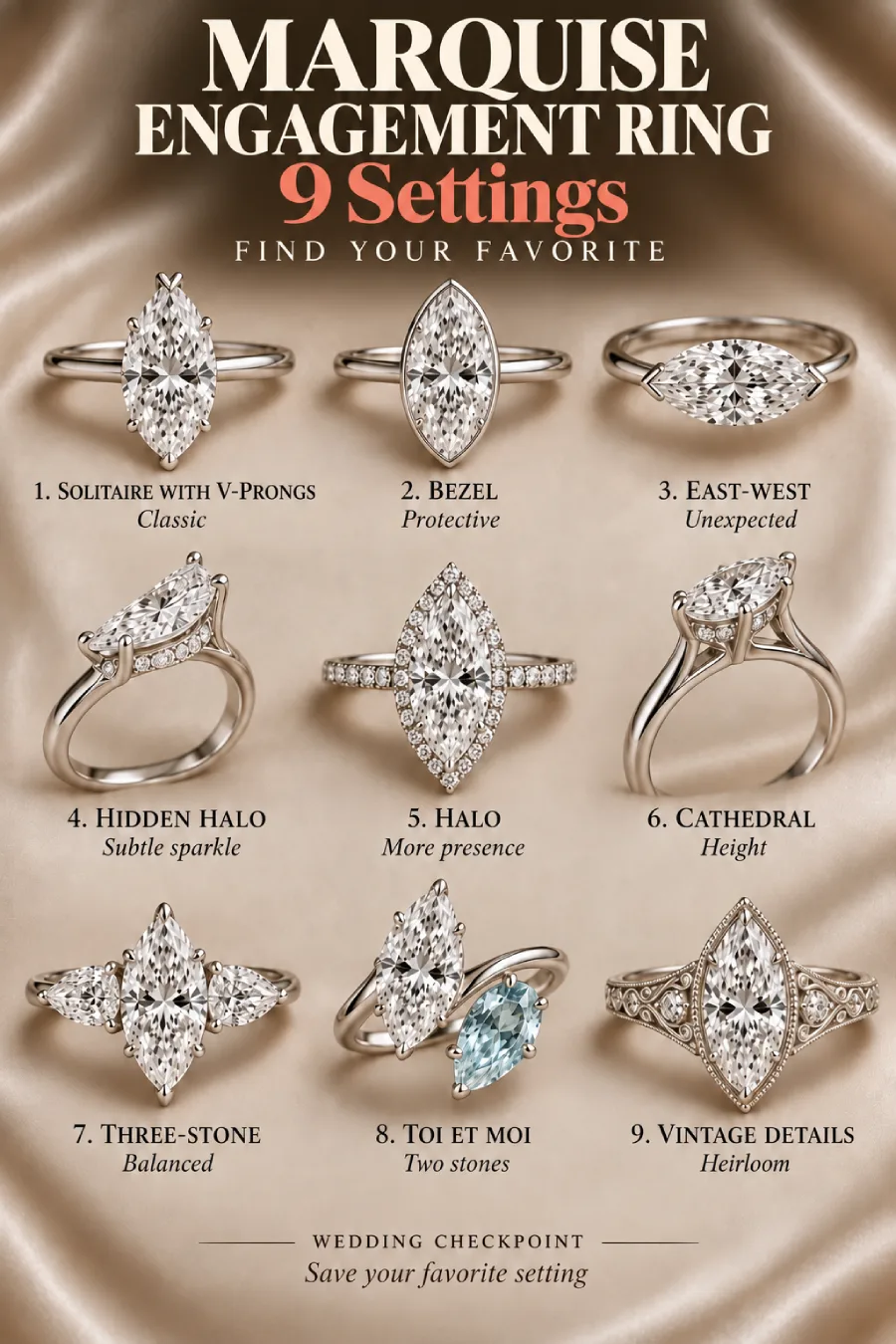
Setting Options for a Marquise Engagement Ring
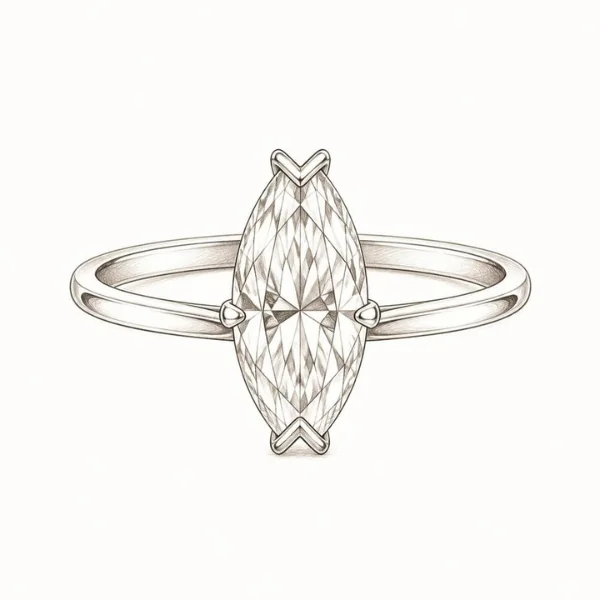
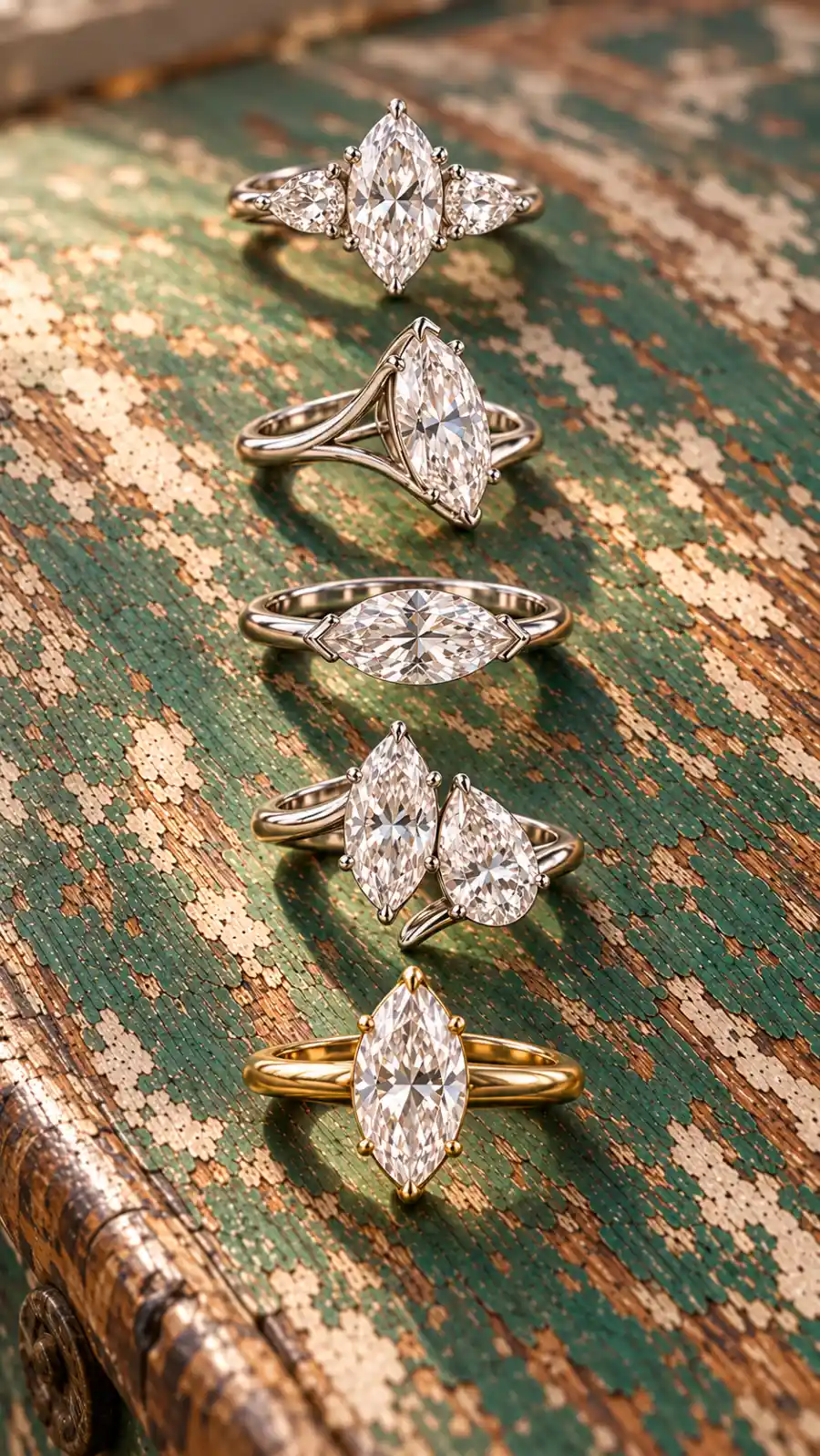
Classic
Solitaire with V-prongs
A solitaire engagement ring keeps the focus on the shape and pairs easily with a thin band.
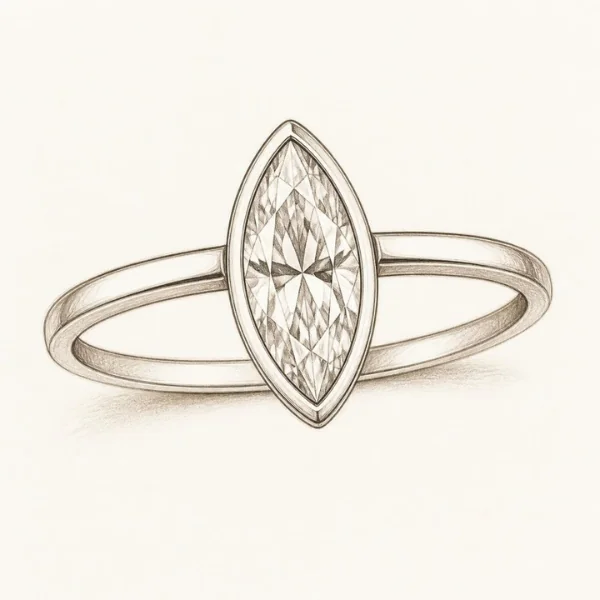
Protective
Bezel
Protective and streamlined, a good fit for active hands.
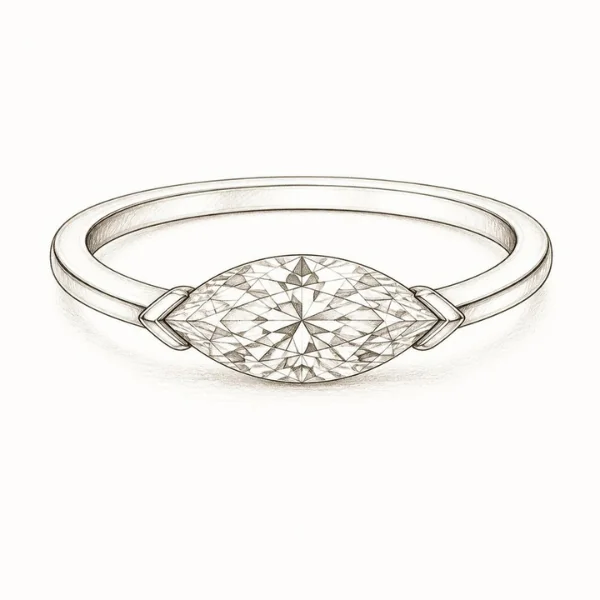
Unexpected
East-west
The stone sits sideways across the finger. How high it sits, and which bands fit beside it, depends on how the setting is built, so check both before you commit.
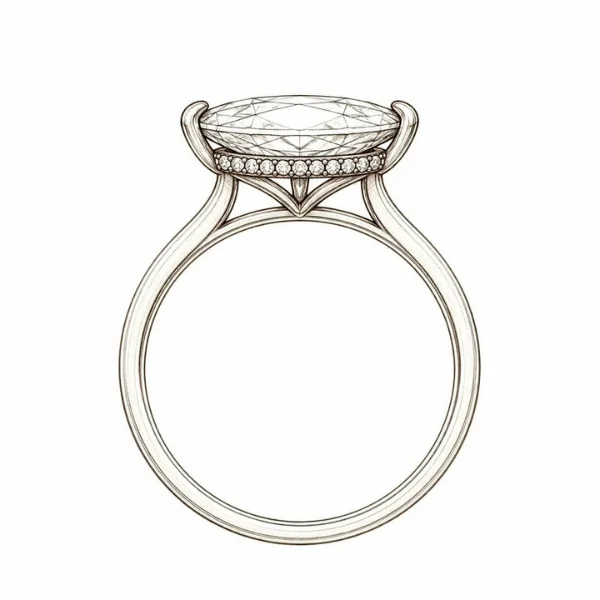
Subtle sparkle
Hidden halo
A row of small diamonds under the center stone adds sparkle from the side while keeping the top view clean.
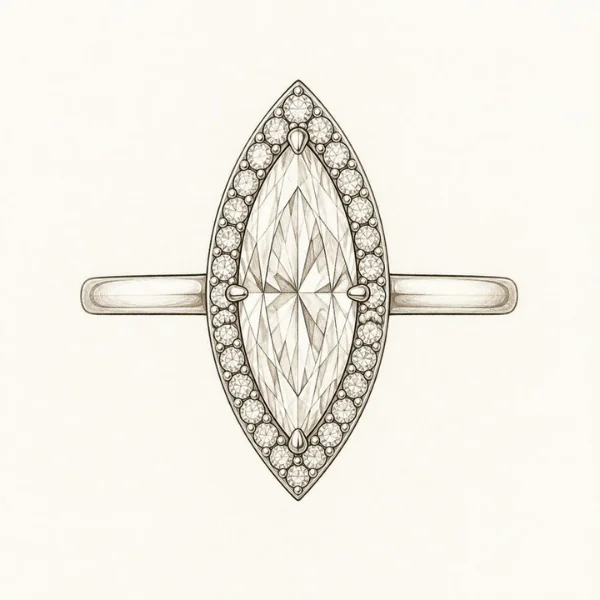
More presence
Halo
A frame of small diamonds traces the outline and can make the center look larger.
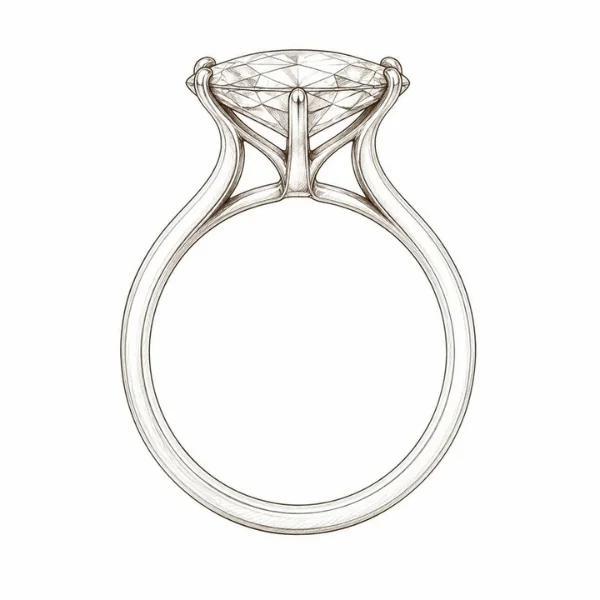
Height
Cathedral
Metal arches lift the stone above the band for extra height.
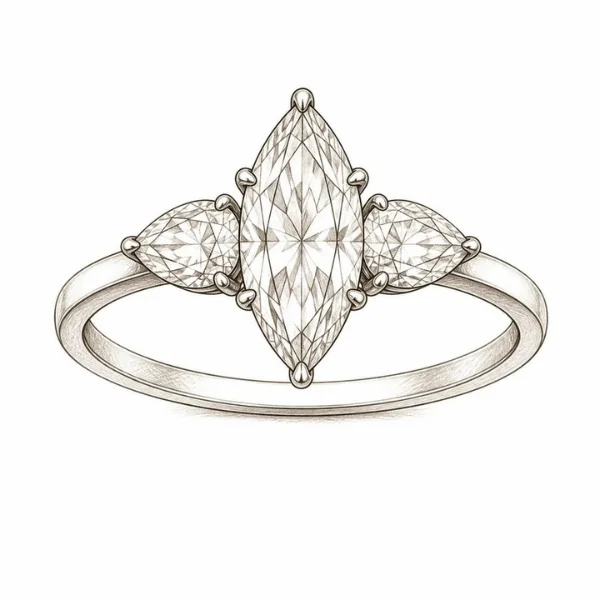
Balanced
Three-stone
Pears, smaller marquises, or baguettes on each side create a balanced, heirloom look.
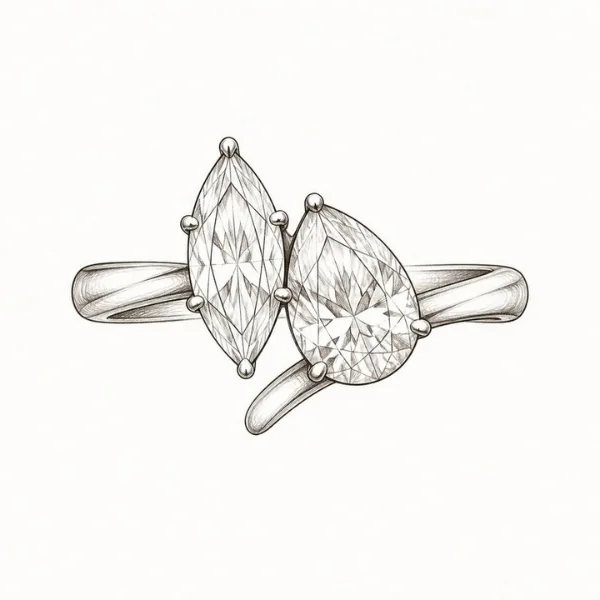
Two stones
Toi et moi
A marquise paired with a second stone, like a pear or a colored gemstone.
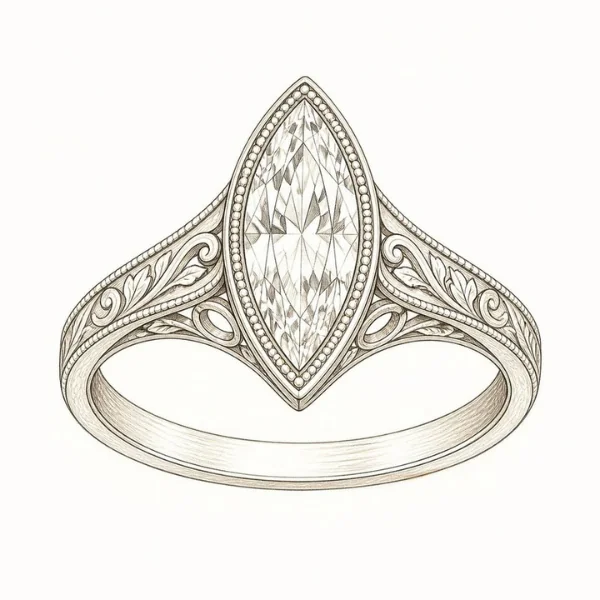
Heirloom
Vintage details
Milgrain edges and engraving lean into the shape’s Edwardian roots.
Sketches are illustrations of each setting style, not specific rings.
Each of these changes how a wedding band will sit next to the ring, which brings us to the most important step.
Choose Your Engagement Ring and Wedding Band Together
A marquise’s points often leave a gap when a straight wedding band sits next to it. Some couples like that gap. Others find it bothers them every time they look down.
Here’s what I’ve learned watching couples plan their ring stacks: the ones who choose the engagement ring and wedding band at the same time avoid the most surprises. Settings vary in height, prong placement, and gallery shape, so a band that fits one marquise ring may not fit another.
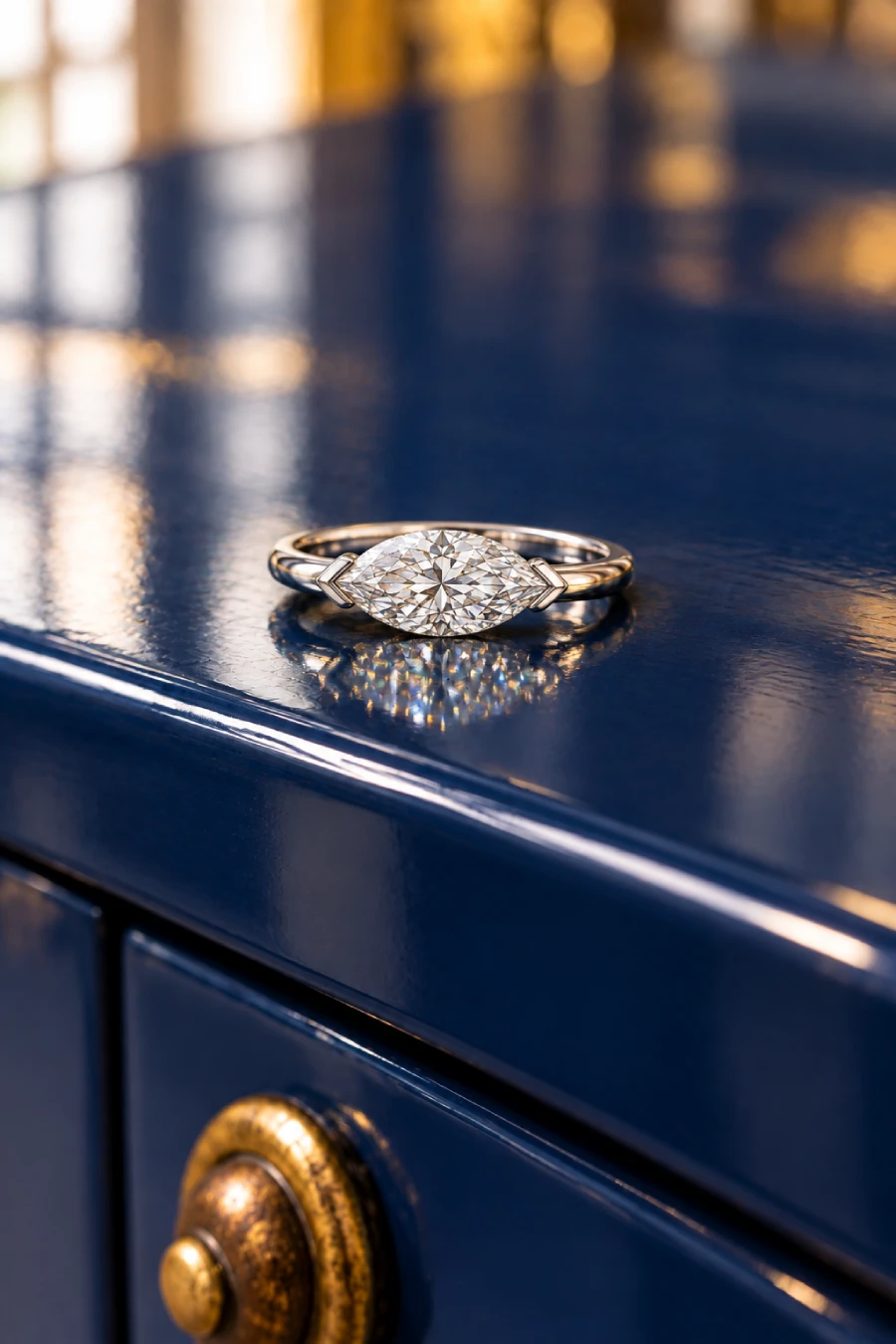
Band styles to try
- Contour or curved band. Shaped to follow the outline of the marquise.
- Chevron or V-shaped band. Dips toward the stone and frames the center.
- Notched band. A small cutout can let a straight band sit closer to the setting.
- Straight band. Clean and minimal. Whether it sits close depends on how high the center stone is set.
- Two bands. One above and one below the engagement ring.
Key Takeaway: Test the exact engagement ring and wedding band together before buying either. Put them on, look at them from the top and the side, and check for gaps, rubbing, or prongs catching on the band. If you buy the engagement ring first, ask the jeweler which bands are designed to fit that specific setting.
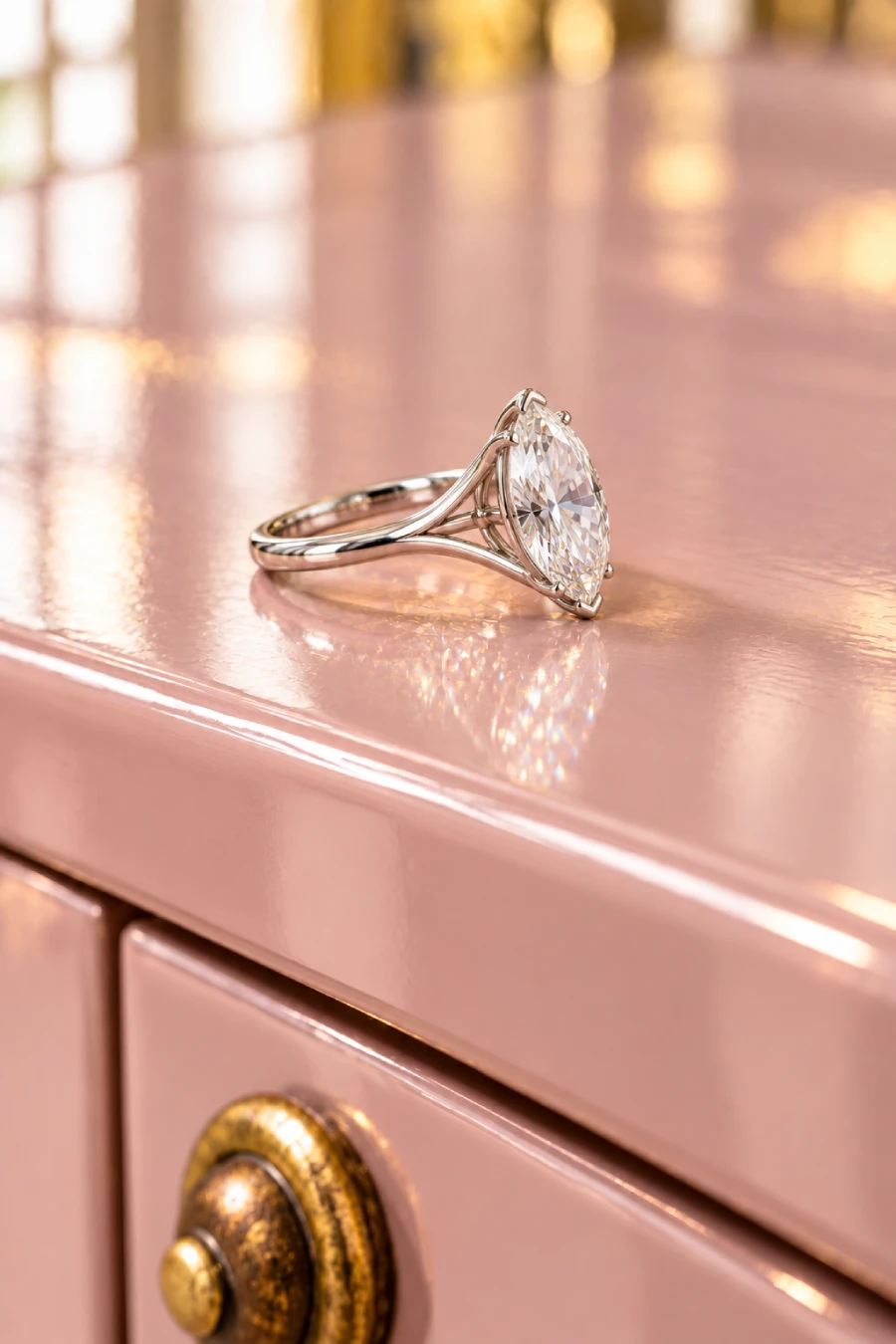
Marquise vs. Oval vs. Pear vs. Dutch Marquise
| Shape | Silhouette | Vibe | Durability |
|---|---|---|---|
| Marquise | Curved sides, point at both ends | Dramatic, vintage | Two points need protection |
| Oval | Curved sides, no points | Modern classic | No points to protect |
| Pear | Rounded at one end, point at the other | Romantic | One point needs protection |
| Dutch marquise | Straight, angled sides, a long hexagon | Architectural | Points need protection |
One note on the Dutch marquise: it is a trade name, not an official gemological shape. Grading reports usually describe it as a “hexagonal modified brilliant,” according to Stienhardt. Read the shape description on the report, not just the product name.
Love elongated shapes but want softer oval cuts with no points? Our oval engagement ring guide covers it. For every shape side by side, see our breakdown of 12 engagement ring cuts and diamond shapes.
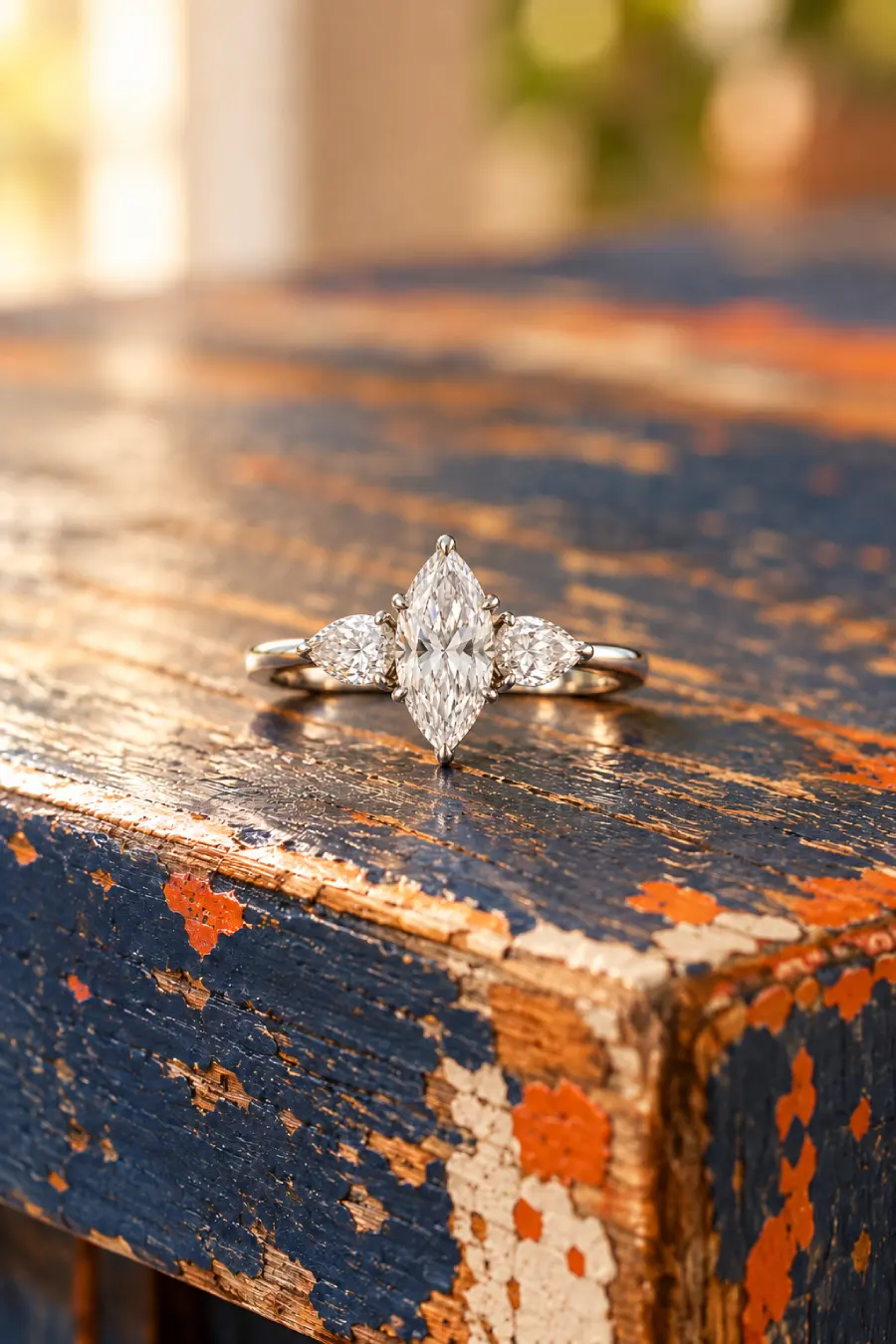
Choosing Your Metal
- Yellow gold: Warm and vintage. 14k is a common choice for everyday rings because it tends to be harder than higher-karat gold. In The Knot 2024 Jewelry and Engagement Study, yellow gold and white gold each accounted for 36 percent of the engagement rings reported.
- White gold or platinum: Crisp and bright, and good at showing off a colorless stone.
- Two-tone: A white metal head on a yellow gold band keeps the stone looking white with a warm band.
For more on settings and metals, our guide to popular engagement ring styles goes deeper.
Your Marquise Buying Checklist
Before you buy
- Set your budget, then decide how to split it between the center stone and the setting.
- Try different ratios on your hand before narrowing the search.
- Compare at least three stones of similar carat weight, each with a grading report.
- View the exact stone face-up in normal light and watch its video, checking symmetry and the bow tie.
- Ask about the tips, including whether the stone has French tips.
- Confirm the setting protects both points with V-prongs, a bezel, or similar.
- Try the engagement ring and wedding band together before buying either.
- Get the ring appraised and insured as soon as it is on your finger.
- Book an annual prong check with your jeweler.
How-To: Planning a proposal around a marquise? Get the ring sized ahead of time if you can, or choose a band style that is easy to resize. Bands with pavé all the way around can be harder to resize later.
Marquise Engagement Ring FAQ
Is a marquise practical for everyday wear?
It can be, as long as both points are protected. V-prongs or a bezel cover the tips, and an annual prong check catches problems early. If you work with your hands a lot, a bezel is worth a close look.
Is a marquise cut more expensive than a round?
Often not. Diamonds.pro notes that marquise diamonds have traditionally cost less than rounds. Prices depend on the individual stone and the market, so compare certified diamonds of similar quality side by side.
What is the best ratio for a marquise diamond?
There is no single best number. GIA notes most marquise diamonds fall between about 1.6:1 and 2.2:1. Try a few on your hand and choose the length that looks right to you.
Does a marquise look bigger than a round diamond?
It tends to. Because the weight is spread along a long outline, a marquise usually looks larger face-up than a round diamond of the same carat weight.
Can I wear a straight wedding band with a marquise?
You can. Expect a small gap at the points unless the setting sits high enough for the band to slide underneath. Try the exact pair together before buying to see how they sit.
The Bottom Line
The bottom line is this: a marquise diamond engagement ring gives you drama, length, and vintage character in one shape. Choose a well-proportioned stone, protect those points, and pick your wedding band at the same time, and the whole set will work as well as it looks.
Ready to compare it with the other shapes? Bring your shortlist to your next jeweler appointment.
Keep planning with Wedding CheckPoint
Keep reading
12 engagement ring cuts compared
Every diamond shape side by side, on one chart.
Keep reading
Antique and vintage engagement rings
Old-world details that pair beautifully with a marquise.
Keep reading
Lab-grown diamond engagement rings
Pros, cons and what to know before you buy.
Keep reading
The history of engagement rings
How the tradition started and where it is headed.
Keep reading
What to do first after getting engaged
Your first steps, appraisal and insurance included.